Sunday, July 16, 2006

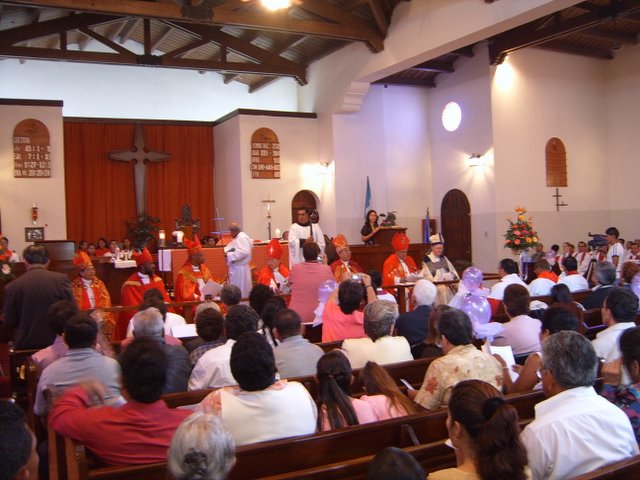
Consecration of the Newest Anglican Bishop in the Province of Central America

Bishops from IARCA and ECUSA Lt-Rt.- Rt. Rev. Sylvester Romero-El Camino Real(CA),Rt.Rev. Lloyd Allen -Honduras, Rt.Rev. JulioMurray-Panama, The Most Rt. Rev. Martín Barahona- El Salvador, Rt. Rev. Armando Guerra- Guatemala, Rt. Rev. Héctor Monterroso- Costa Rica, Rt. Rev. Charles Bennison-Pennsylvania


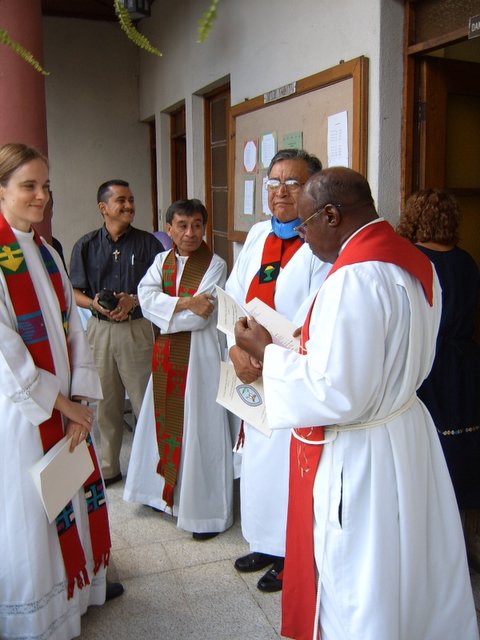
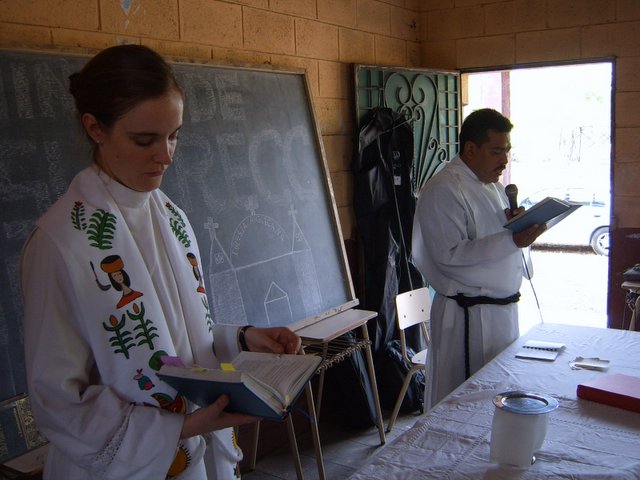
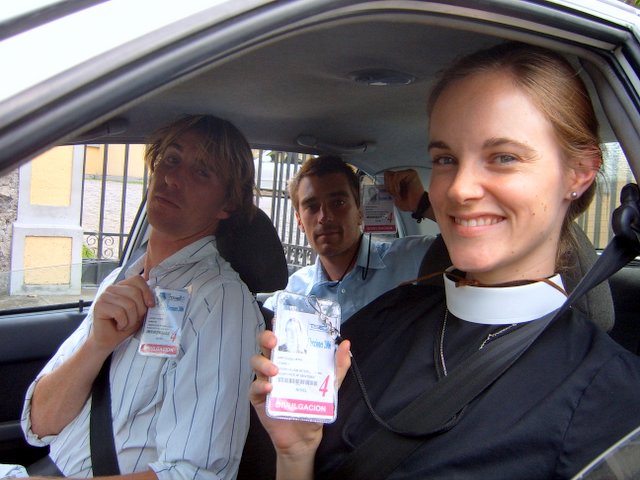
Amy visits with priests from El Salvador and Nicaragua before the service.
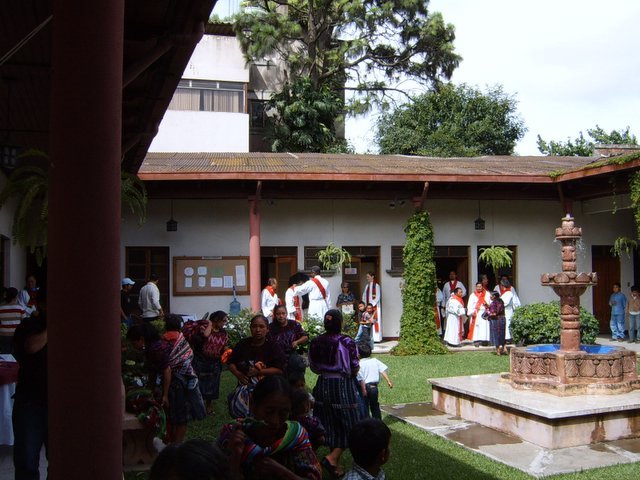
Clergy from various dioceses in the Anglican Central American Province and members of the Anglican Church in Guatemala prepare for the consecration.


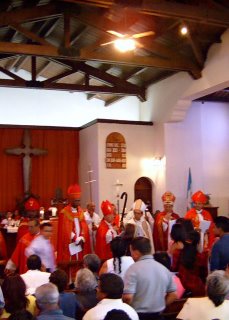
Bishop Martín Barahona presents the new Suffragan Bishop to Guatemala, Virgilio Arreaza, to the congregation

Wednesday, May 24, 2006

"Holy Land, Holy People": The 26th Anniversary of Romero's Martyrdom


I left the studio on March 24 at 7 in the morning, after the broadcast ended. I had been invited to share my thoughts on Oscar Romero, along two Roman Catholic bishops-- Ricardo Urioste, the head of the Romero Foundation and a personal friend of Romero's, and Rafael Urrutia, who is overseeing his canonization process, on El Salvador's equivalent of "Good Morning America." Urioste had invited me, after we had both spoken on a panel the night before, my topic being "Romero Outside of El Salvador"-- his witness around the world. I was definitely out of my league on the show, especially because Mauricio Funes, the journalist, did not receive my email the night before and mistook me for an expert on Romero, rather than just an admirer!

After greeting and chatting about Romero with a homeless gentleman, I made my way to the Chapel of the Divine Providence at the small Catholic cancer hospital where Romero lived during his three years as archbishop, and where he was gunned down behind the altar on the evening of March 24, 1980. The ecumenical service was already underway, but I found a seat next to a friend. Many people spoke-- people from different places in Central America, people of different faith traditions, campesinos (peasants), and even the mother of the first Salvadoran soldier killed in Iraq. I always feel myself to be in the presence of the Holy when I enter this chapel, but today there was a special energy there. One of the speakers characterized it when he said, "We are in the holy land. This land is holy because so many have given their lives here for the sake of the Gospel. And this people is holy." Holy land, holy people. Tierra santa, pueblo santo.

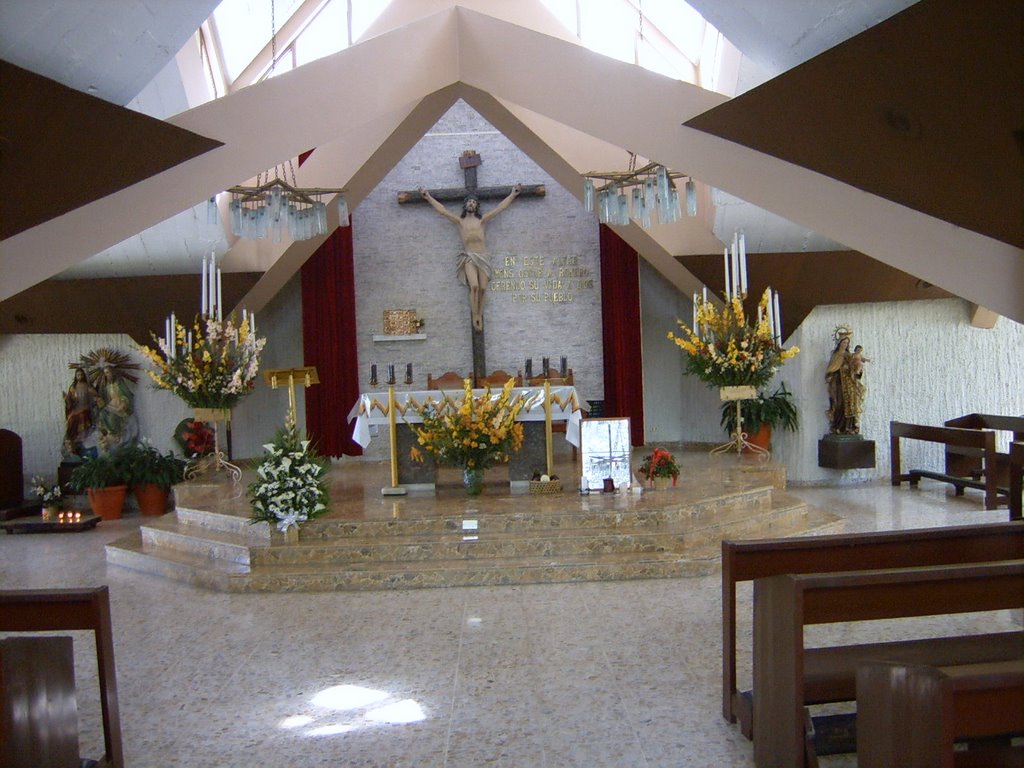
The inscription behind the altar reads simply, "At this altar Monseñor Oscar A. Romero offered his life to God for his people.¨

The most wonderful thing about being on national television was that people came up to me after the event and told me their memories of Romero. There is an on-going love affair between the people of El Salvador and Oscar Romero, and his love for them, and theirs for him means that his memory gives them permission to speak about things which are usually kept silent.

At the seniors meeting at my church that afternoon, virtually at the mere mention of Romero's name, the floodgates opened. For an hour and a half I heard the little old ladies at my church tell the most horrific stories of what they had suffered during the war. One usually quiet woman talked with ferocious animation about her experience fleeing with the people of her village while military planes bombed them and soldiers chased them. Later she listened while death squads tortured and killed her son and pregnant daughter-in-law. Since March 24, but not before, I have begun to hear these stories of the war from the people in my parish, most of whom were refugees from rural parts of the country that saw the most fighting, Suchitoto; Berlin. I hear a new story now every few weeks.

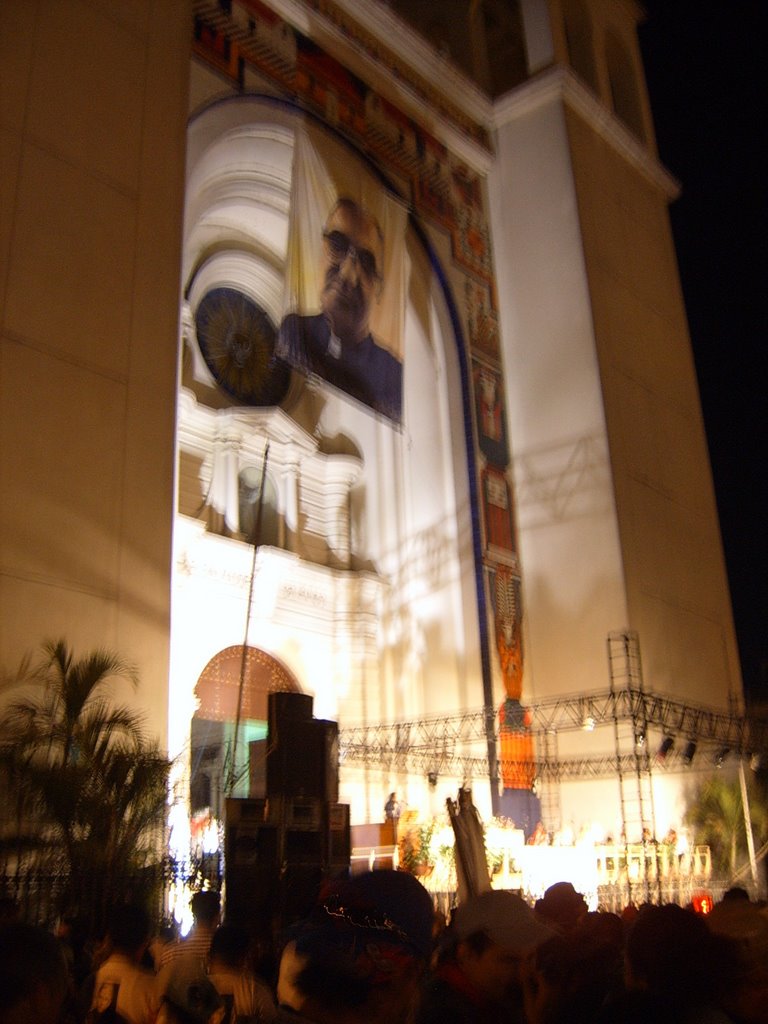
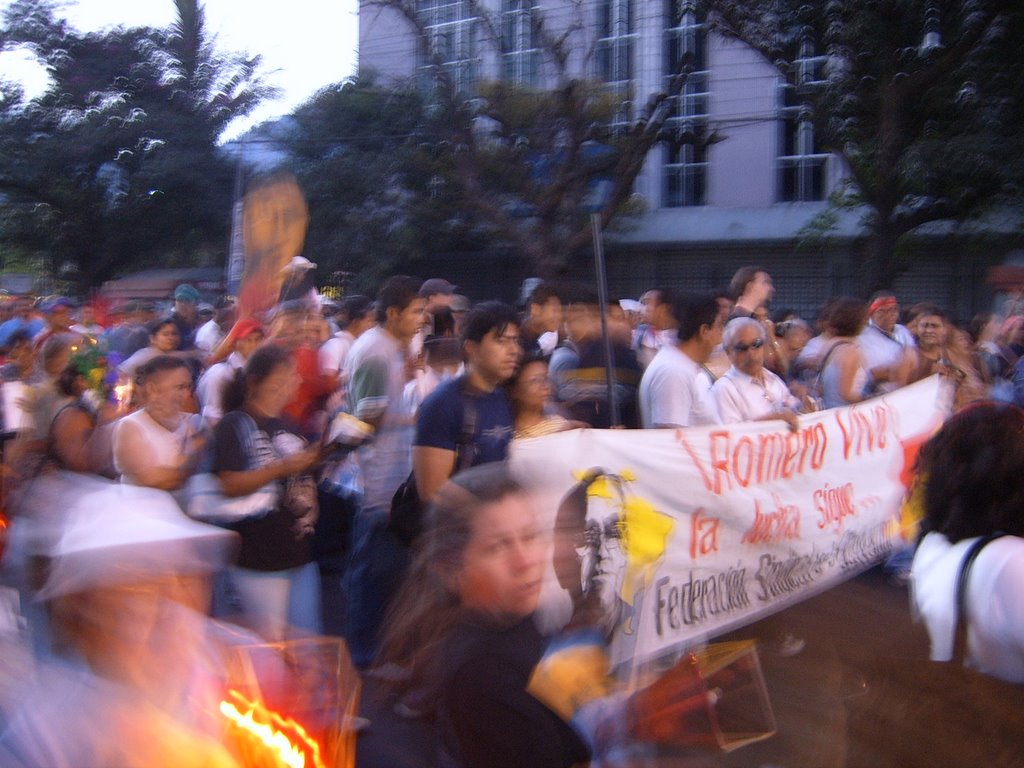
In the evening we participated in a two-mile march from the Salvador del Mundo statue to the steps of the Metropolitan Cathedral, where Romero is buried. Probablly five thousand people participated in the candle-lit march, singing, shouting, talking, and laughing, and another ten thousand were waiting in the plaza in front of the Cathedral for the Eucharist that would begin the all-night vigil. But as one speaker remarked, this was a people, not a crowd or a mob--"un pueblo, no una masa," and they were gathered for worship. There were shouts that peppered the Eucharist, "We want bishops on the side of the poor!" (The bishops who officiated were in the theological line of Romero, but the current Archbishop, who is extremely conservative, was no where to be seen.) And "You can see it, you can feel it, Romero is here!" I took communion, because I knew Romero would have invited me, and one small girl was very persistent in passing me the peace.
+Amy
To learn more about Oscar Romero's story, look at these bios: http://www.westminster-abbey.org/tour/martyrs/6_or.htm and http://salt.claretianpubs.org/romero/romero.html or watch the movie Romero. Romero's compete sermons (in Spanish) can be found at http://servicioskoinonia.org/romero/, and you can listen to them at http://www.cervantesvirtual.com/bib_autor/romero/fonoteca.shtml.

Monday, April 24, 2006

Mission in Las Canoitas

Preaching to the congregation of Las Canoitas and to the greater community of Bajo Lempa over Radio Mangle (Mangrove Radio)


Lay Missioner Cain Hidalgo conducts the Prayers of the People

Visiting after the service with the people of Las Canoitas, Bajo Lempa


Left: Heading home after the misa

Sunday, April 16, 2006

Gran Vigilia Pascual


Saturday, April 15, 2006

Viernes santo


Thursday, April 13, 2006

What my hands did on Maundy Thursday

Embraced the shoulders of friends whose mother/grandmother had past away
Held the Bishop's bible as I read the gospel at her funeral
Kneaded communion bread
Grasped a broom handle and swept the church and front steps
Washed and dried feet-- baby feet, children's feet, old women's feet, feet that had survived massacres, feet that had fled from fighting, sturdy women's and men's feet, my husband's feet
Offered bread and wine to friends-- the body and blood of Christ
Held Vince's hand as we fell asleep

Wednesday, April 12, 2006

A Holy Week Reflection on Suffering

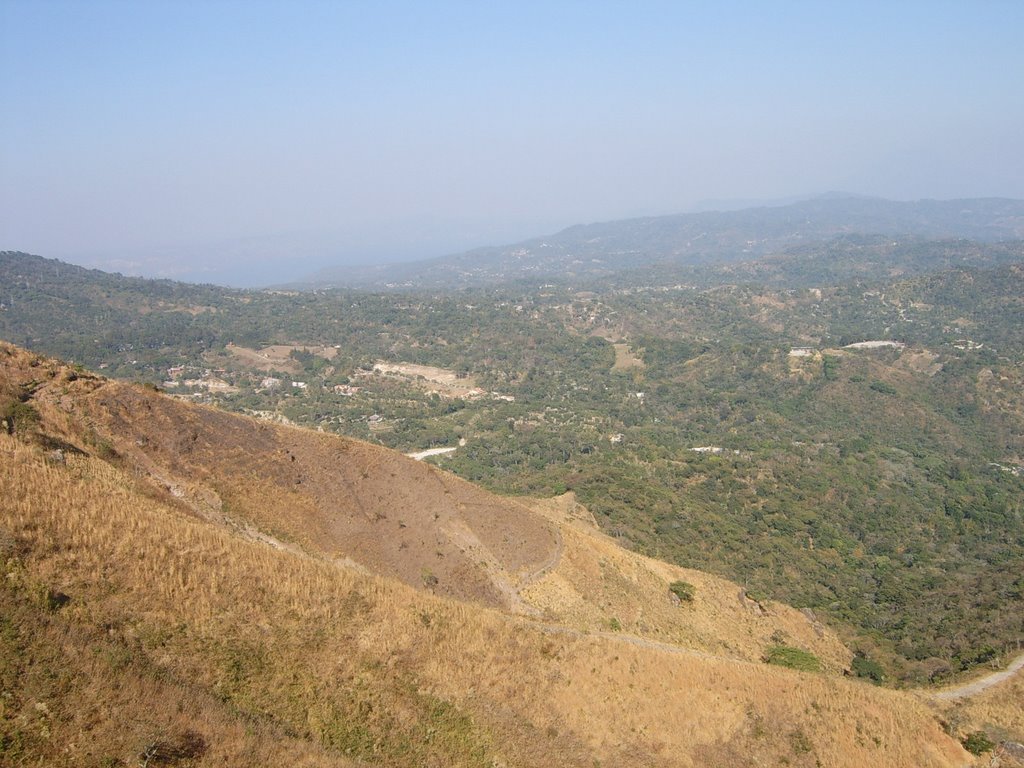
View from Puerto del Diablo, a notorious body dump during the war

Today, Miércoles Santo (Holy Wednesday) I lead a mini-retreat on “Following Christ in his Passion and Resurrection.” The retreat didn’t go precisely how I had planned, but I really got something out of it, and I think the other eight adults present did as well. I thought I would share a few of the reflections that came out of the group with you.

We read Mark 8:34-37, and asked what it might mean when Jesus says, “Those who try to preserve their lives will lose them, and those who sacrifice their lives for my sake and for the sake of the Gospel will save them.” First, we tried to come up with examples of people who try to preserve their lives, but in the end, not only die, as we all do, but end up killing their interior lives as well. The immediate example that came to mind was the very wealthy. In this country anyone with money has a ten foot high wall, usually with barbed wire on top, around their home. We talked about the fact that walling out the world might help give a sense of security, but that it also cuts one off from the reality of the world outside, and in the end will not protect. We talked also about people who turned others in to the death squads during the war. Romana spoke right up, ¨Yes, if someone had an enemy in the town, that was it, because they´d turn them into the death squads, and they´d be killed. And then that person felt all important.¨ ¨But their soul?” I replied. When we make decisions to preserve ourselves at the cost of others—big or small—these decisions kill a piece of our soul. That is how some individuals in this country arrived at the point where they could do unspeakable things to other human beings—those who committed atrocities were simply dead inside already.

We then looked at the other alternative—the option for life. What does it mean when Jesus says we must be ready to sacrifice our lives? Or when he says we must “deny ourselves”? We came up with a lot of different answers—literal examples like Oscar Romero and the Salvadoran martyrs who gave their lives in the struggle for justice, and people more recently who have been willing to risk and sacrifice their lives to save others during the disasters. But how do we give away our lives on a daily basis? What if we were to hold our lives, our time, our possessions, our comforts, our pride, our resentments, etc, more loosely, to let go of our death-grip on them? What if we were to take the words of Jesus, “Father, into your hands I commend my spirit,” as a daily motto, keeping in mind our mortality and handing over our lives to God, and remembering that everything we have and are, and our very breath from moment to moment, come from God? What if we were to give thanks to God for everything, even the things we don’t like?

Then we came to the part about the cross. I have the immense privilege at the moment of auditing a class taught by the liberation theologian Jon Sobrino, who talks about “carrying/bearing reality”—“cargando con la realidad,” as a necessary requisite for the redemption of reality, on the pattern of Jesus. Henri Nouwen talks in his book on the Stations of the Cross about this kind of solidarity—as being truly present to the reality of the poor and those who suffer injustice. He goes one step further, however, in saying that if we are unable to be present with and carry our own crosses, the suffering which is particular to our selves and situations, our own reality, then we will be unable to bear and be in solidarity with the reality of the world. In his characteristic vulnerability Nouwen names his own crosses—loneliness, depression. So our little group spent fifteen minutes writing down answers to these questions: (1) What are your crosses? (2) How is Jesus calling you to follow him with these crosses?

When we did this reflection, something quite remarkable happened. I thought we would all be very depressed after writing about our crosses, and that we would need a whole discussion about resurrection, which I had prepared. But as we shared about the experience of writing about the deepest sufferings that afflict us in our daily lives, the mood was quite joyful! I had found that as I wrote about my crosses, and what I thought Jesus would want me to do about them (most of which had to do with a change of attitude or approach on my part), the weight of them grew less and less. If I approach these crosses as Jesus is asking me to, it turns out, I will actually suffer less pain in my daily life! Jesus doesn’t want me to suffer! Others had the same experience, and shared about how much it helped to write, how wonderful it is to know that we don’t have to carry these things on our own, that God is there wanting to help us, if we’ll allow it. We no longer needed a discourse on resurrection. We had experienced a moment of it, right then and there. We had experienced that entering through the narrow door of being truly present to our suffering and mortality, “carrying reality,” and we found life springing forth from those very crosses, not only eternal life, but the abundant life that Christ wants for us here and now. For the first time in my life I think I truly understood why Jesus asks us to “carry our crosses,” and follow him, and truly believed him when he says, “My yoke is easy, and my burden is light.” It’s not Easter yet, but this merits an ¡Aleluia!
Tuesday, April 11, 2006

Holy Tuesday Children´s Retreat

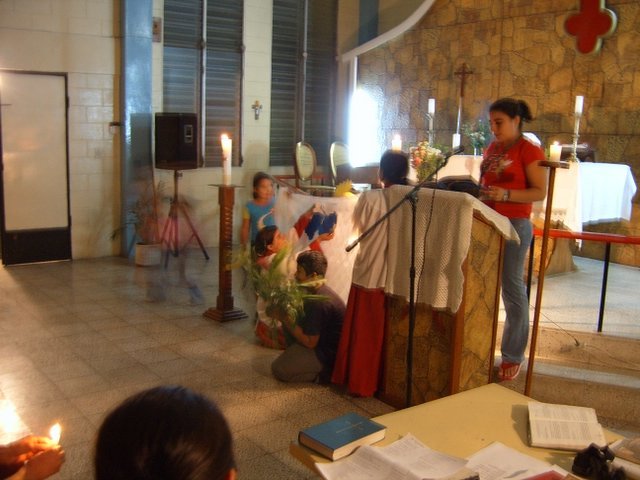
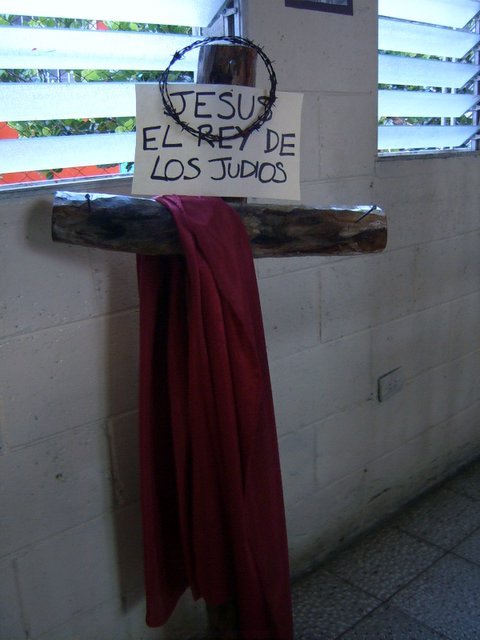
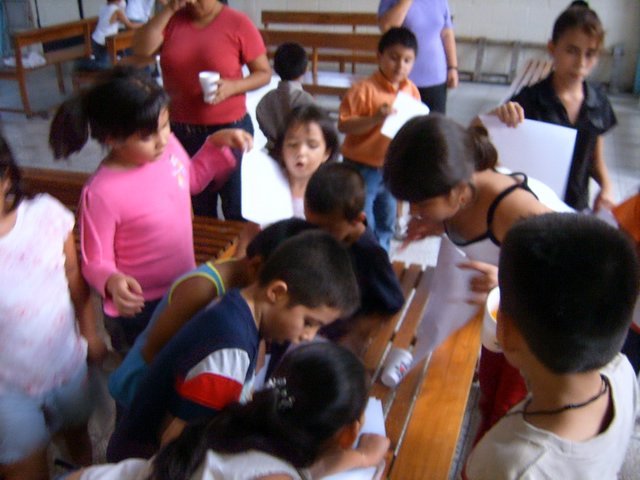
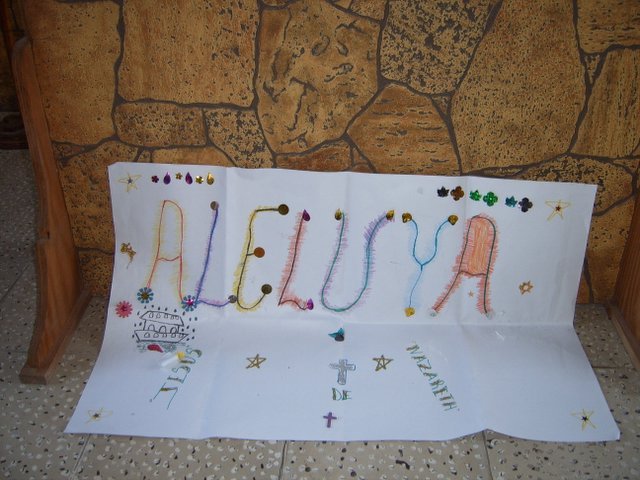
We had a fun (and slightly chaotic!) time Holy Tuesday with about twenty children from the parish, taking a walk through the events of Holy Week. They had experienced Palm Sunday dramatizing the triumphal entry, so we started with Jesus in the Temple at the entrance to the church, where I charged a ¨temple tax¨ for the kids to enter the church, and ¨Jesus¨ did away with that! Subsequent stations included Judas betraying Jesus, the Last Supper with communion (with sweet bread and orange juice) and foot washing, the garden of Gethsemane, Jesus before Pilate (the kids washed their hands and felt a crown of thorns). Then we followed Jesus as (s)he carried the cross, stumbling. We all helped carry the heavy cross, and found it was much easier when we all helped. Real nails were driven into the cross, as we recited the seven last words of Jesus, and then we returned to the church to ¨bury¨Jesus (the crown of thorns and ¨Jesus¨ sign wrapped in a white sheet) behind the altar. After talking about what death is like, and what Jesus´death means, we told the resurrecction story, complete with the ¨Aleluia¨ sign the kids had made. Thanks so much to +Steve Kelsey for sharing his Children's Good Friday service with me!

Posted by Picasa

Sunday, April 09, 2006

Domingo de ramos

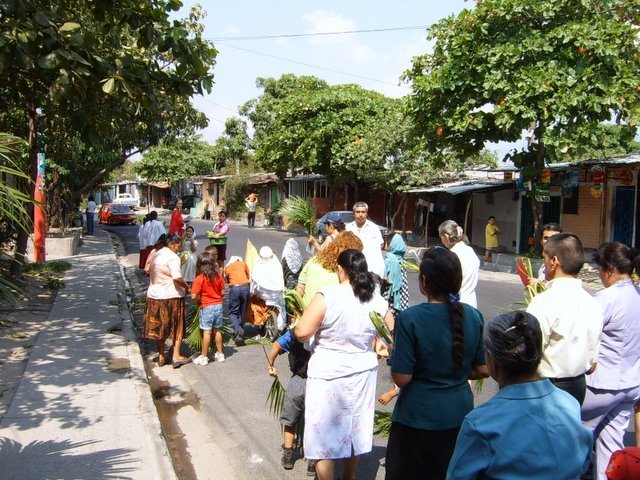
Gathering and beginning the Palm Sunday procession at the Mercadito (little market) in Amatepec


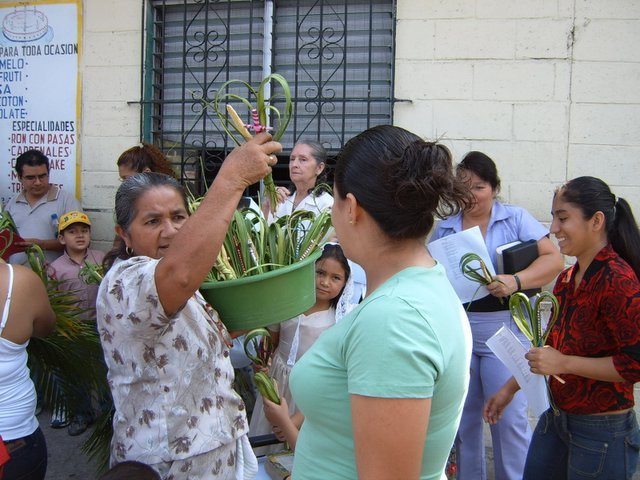
Niña Romana passes out the palms and crosses to those in the procession and to nearby people in the neighborhood


Processing down Calle de los Abetos to the church

Jesus hangs on while attempting to peer over his donkey's massive ears. A very suave animal the kids created that could even do wheelies.

Wednesday, March 15, 2006

A perspective on immigration reform from El Salvador

I thought I would share with you all the letter I sent to members of the Senate Judiciary Committee on immigration reform. The legislation the committee is working on is in my opinion preposterous and in-humane, to put it mildly. Being in El Salvador has really given us a chance to look at immigration issues literally from the "other side"--and the perspective is very different. Bishop Barahona says that no human being is "illegal," that all of us are citizens of the Earth, and should have the ability to move about it freely. Recalling Matthew 8:20 ("Foxes have holes, and the birds of the air have nests, but the Son of Man has no where to lay his head"), he points out that birds, foxes, and little animals cross international borders freely, but human beings are not free to do so. The day before my friend Becky Noonan Heale got on the plane from El Salvador to the U.S. after my ordination, she was struck by the fact that she was doing something most of the people around us in El Salvador are not allowed to do.

Here are some other resources on immigration reform:
+A recent Episcopal News Service Article http://www.episcopalchurch.org/3577_72859_ENG_HTM.htm
+The website of No More Deaths in the Desert
http://www.nomoredeaths.org/

Here is my letter:

Dear Senator,
I am a 2005-2006 Fulbright grant recipient working on the subject of social justice and religion with the Anglican Church of El Salvador. I am also an Episcopal (Anglican) priest. During my six months working and studying in El Salvador so far, I have gained a unique perspective on Latin American migration to the U.S. There are the statistics: approximately 700 people a day leave this small country, which is the size of Massachucetts, to attempt to immigrate to the United States without documentation. They leave in hope of finding a job where they might make $6 an hour as opposed to $6 a day (if they were lucky enough to find work in El Salvador, which many are not). There is no one here who is untouched by immigration-- families spend years apart, without the freedom to travel and see one another. Then there are the personal connections: I experienced the angst that 700 families experience daily when a young woman from the church where I work set out with her two-year-old daughter to re-join her husband, who is working without documentation in the U.S. I was aware of the conditions of fear and deprivation that undocumented immigrants live under in the U.S. from my work with the immigrant community there. Living in El Salvador I have learned about the incredible dangers that migrants, especially Central Americans, face just to arrive in the U.S.: migrants from El Salvador, Guatemala, and Honduras must travel for days through Mexico without documentation-- they run the risk of capture and gross human rights abuses at the hands of Mexican police-- before they must face the well-known perils of the deserts, rivers, and trains at the U.S. borders, where people die daily, for the "crime" of desiring a better life.


I understand that the immigration bill under consideration by the Senate Judiciary Committee would in fact make it a felony to enter or remain in the U.S. without documentation-- increasing the atmosphere of fear that people live under who have already risked their lives and split up their families to come to the U.S.-- not to steal, not to commit terrorist acts, but simply to work, at jobs most people born in the U.S. would never do, and to earn a wage. I also understand that this legislation would criminalize humanitarian assistance to undocumented immigrants. In that case, Senator, I have to tell you that my faith will force me and many others in the churches to become criminals. In Matthew 25 Jesus commands his followers to give food to the hungry, clothing to the naked, to tend to the sick and to visit prisoners. We will continue to do these things, caring more for those in need and the state of our souls than for the Federal Government's legislation. In that case we would take our places in the prisons, like Shanti Sellz and Daniel Strauss, volunteers with No More Deaths, who are facing 15-year prison sentences for medically evacuating immigrants in critical condition in the Arizona desert.

U.S. immigration law needs to be reformed. You have the opportunity to make things better for people who have come to the United States seeking a better life, like your ancestors. Please do not make them worse.

Sincerely,
The Rev. Amy Denney Zuniga
2005-2006 Fulbright Recipient
Iglesia Anglicana Episcopal de El Salvador

Friday, March 10, 2006

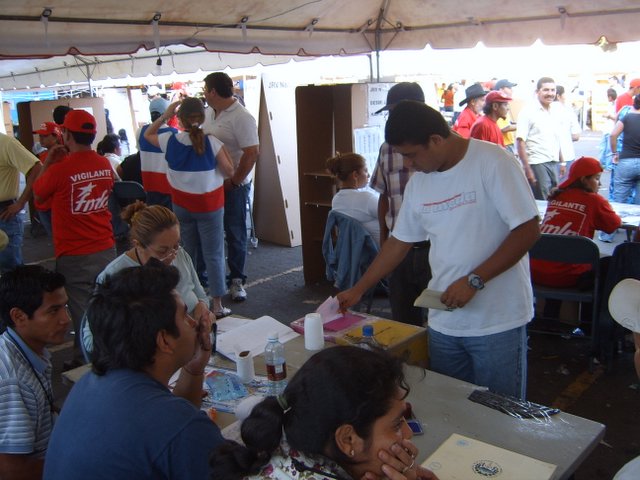
Elections Day El Salvador


International observer team from Iglesia Angicana de El Salvador ready to head to the polls


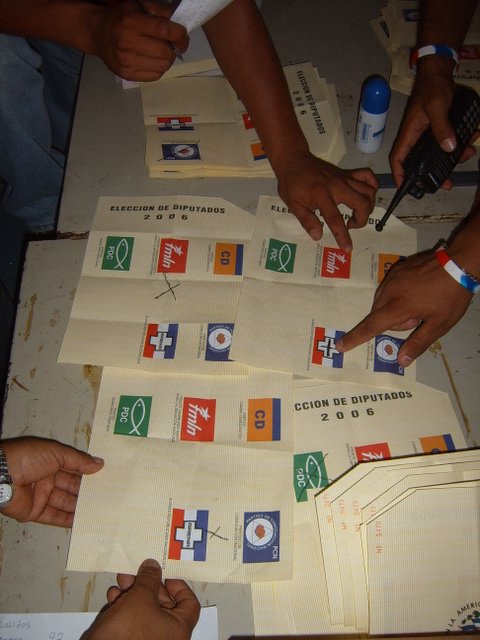
Left: A man, Jose Humberto, was denied the right to vote because of the poor condition of this identifying document, even though his name, picture, birthdate, and other vitals were in the elections roster.

Left: Jose Humberto's info posted on the board

Above: Interviewed by the Co-Latino. According to a Site Boss, 4 others were denied suffrage at this site alone (the last name begins with "A" site for the Soyapango area) because of the poor condition of their DUI's, the Documento Unico de Identidad.


"The Anglican International Elections Observer Team," consisting of Amy and our friends Jeff and Noah, after a perfunctory certification and training process on Friday, headed out on Sunday to observe the process of Salvadoran democracy in Soyapango, where members of Amy's church would be voting. There were 11 different voting sites in Soyapango, one of the largest municipalities in the greater San Salvador area, and we stuck to one-- the site for people whose last names begin with "A". The process went a lot more smoothly than I anticipated-- our site had about 40 different tables, each table with a multi-partisan group of officials each with their job to do in assisting the citizens assigned to that table to vote (including checking the roster, taking the citizen's DUI, passing DUI's and grease pencils to the other officials, marking the citizens thumb black once he or she has voted, and making sure the citizen deposits the municipal and legislative assembly ballots in the corresponding pink or yellow box, etc.). The counting process was even more interesting, as each table went through the procedures for counting their ballots, invalidating unused ballots, and filling out the official "acta" stating how many ballots were received for each party.
In some ways the process is more simple and direct than voting in the U.S. (especially in California, with our obscure ballot initiatives and voting for officials of whose exact responsibilities I'm often unsure), and participation is definatley better-- this election had a better than 50% voter turn-out. In some ways, it is more nit-picky, like many things in El Salvador that have to do with bureacracy and procedure (see the photos of the man who was unable to vote because his DUI was in poor condition). And in some ways, it felt much more significant, because of the recent struggles and lives lost to obtain the level of democracy that does exist here. (Although Noah reminded me that universal suffrage has not always been a given in the U.S., either.)
The results? ARENA, the "offical" party of the president, which was in control during the war and has had control of the presidency ever since, and the FMLN, the party of the former guerilla, were neck-in-neck, both in the municipalities and in the National Assembly. The hotly contested mayorship of San Salvador is still being contested-- Bush-Gore style-- and we are awaiting the official results. I did feel like our vigilant presence at the "A" site in Soyapango made some small difference-- an inlegal ARENA flag behind a table official was removed, our opinion was listened to in debated cases, and somehow people got the message a little more deeply that the process of democracy matters-- not only to Salvadorans, but to their friends in the rest of the world as well.
-posted by Amy and Vince


Right.: All three of these contested on the elections rosters votes were allowed.

Above Left: This vote, apparently for ARENA, was thrown out. Voters are supposed to place an X on the flag of the party they wish to vote for, which lead to some comical advertisements where the advertiser's party flag was crossed out in the ads.

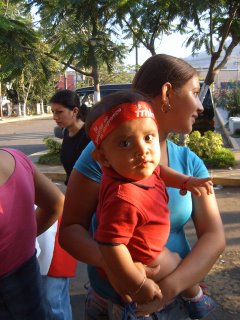
A young FMLN supporter

Thursday, February 02, 2006

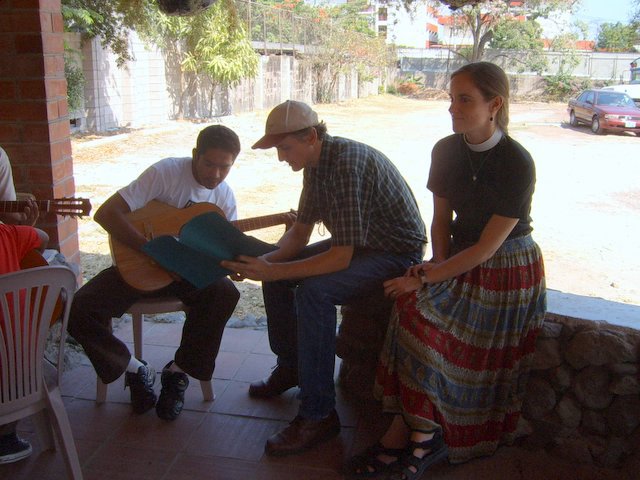
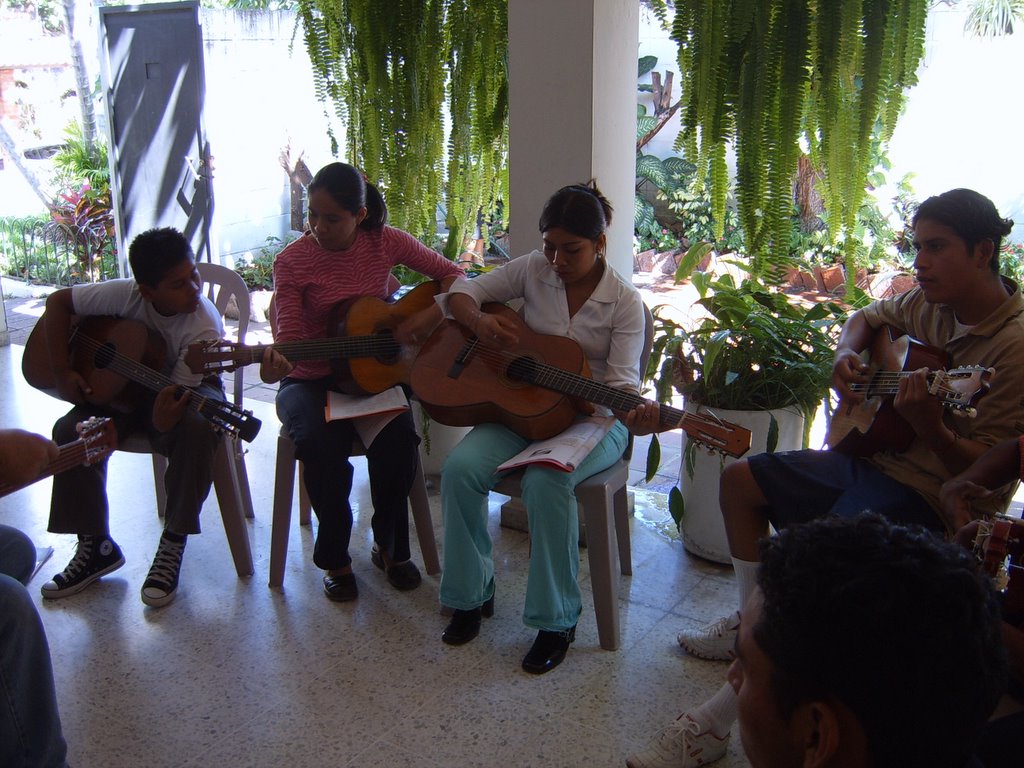
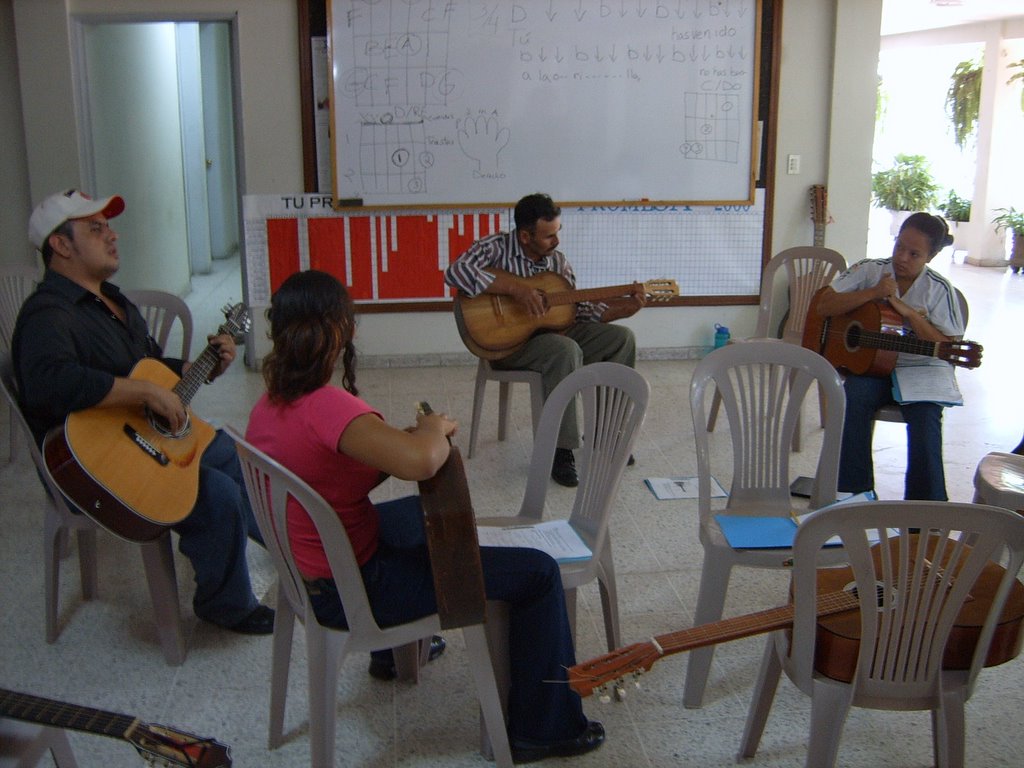
Taller de guitarra numero tres en San Salvador

Students from El Carmen out in the Bajo Lempa region work on new songs

The third workshop went well despite a whigging out by the piano teacher (we're currently searching for another one). The turnout was a little smaller than the last one, but we continue to gain new students from different parishes. The students spent most of the day practicing what they've learned so far while we fostered interchange among them by forming small groups where they were encouraged to help each and teach new students the basic fingerings and chords. Ideally we'd like the workshops to turn into a place where students teach each other and learn from one another. By doing so, it won't be so dependent on us and can continue to flourish in the future and grow into a unique music program that reflects the soul of the church. Songwriting is another area that I'd like to address in the workshops and encourage the musicians to write their own songs and see what we come up with. I have a feeling we could come up with some pretty powerful songs. Transportation continues to be an obstacle for students. Those in the outlying areas are finding the five dollar bus ride to and from San Salvador to be too expensive, and so hopefully we'll start workshops this month out in the Western part of the country to address this issue and reach them. There are a number of eager students out in such areas as El Maizal and out near Ahuachapán with newly donated instruments from the diocese of Arizona, so hopefully we'll put the new guitars to use soon. We are set to order our next batch of guitars for the rest of the parishes with the grant from the Celtic Cross Society at Church Divinity School of the Pacific. -Vince

Friday, January 27, 2006

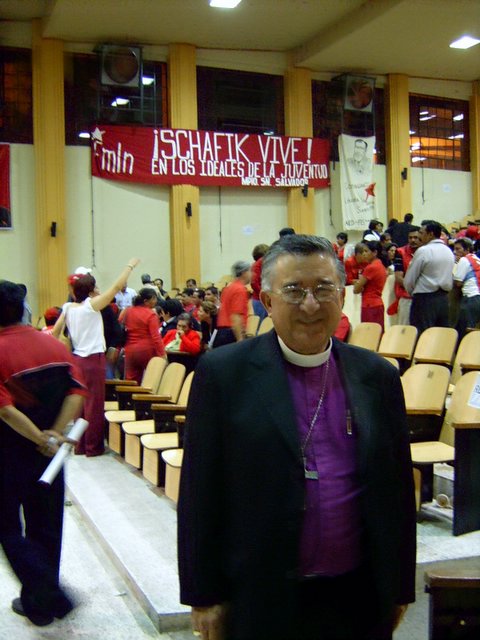
Service for Schafik Handal

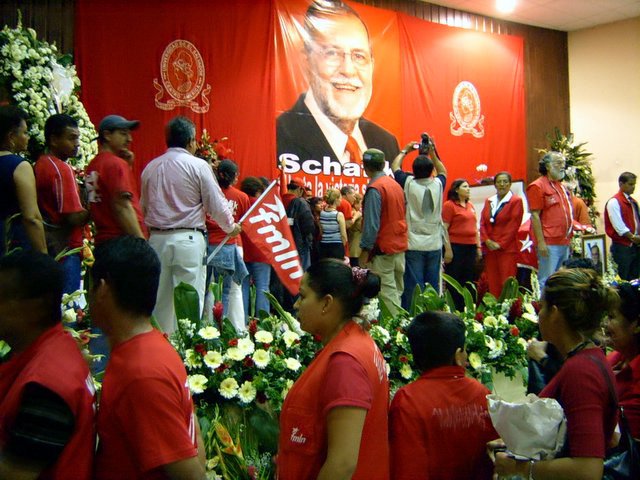
FMLN leaders wait in line to pay their last respects.
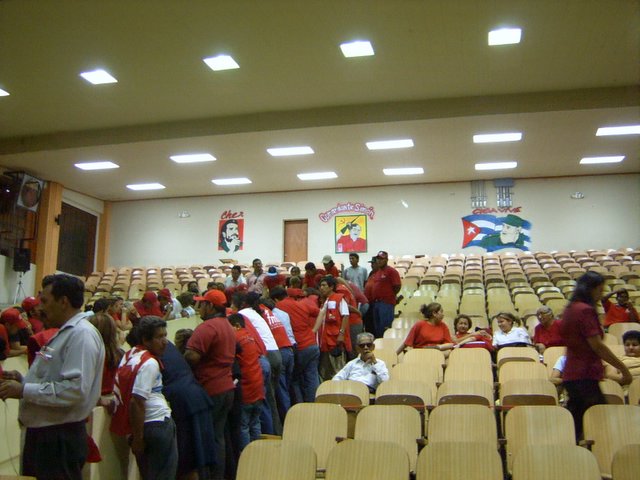
It was a zoo trying to get into the National University last Thursday night, where one of four night's consecutive wakes was being held for Schafik Handal, ex-comandante of the guerilla, and leader of the FMLN socialist political party that the guerilla became after the peace accords. Schafik was 75 years old, born into priviledge, and had spent most of his life struggling for social justice in El Salvador. He died of a heart-attack on the 24th of Februrary in the national airport, where he was returning from the inauguration of the new leftist Bolivian president. The airport in this country is not equipped with a defibrilator.

After having the trunk checked for bombs or weapons at gate, I parked the car and we made our way toward the mass of people in red. My companions and I made a bit of a spectacle-- four priests in clericals-- three North American, one Salvadoran-- and an elderly North American woman with a cane, as we made our way through the sea of red and finally where allowed through the ropes that were blocking the entrance to the law auditorium, where we understood the ecumenical service was to be held. During our forty-five minutes of waiting in the auditorium, we began to converse with a gentleman in his fifties who had been in the guerilla, and now works as an accountant. He looked earnestly into my face, and said, "Thank you. I can't tell you how much your support meant to the people during the war. It lifted us up when we were failing." My stomach dropped sickeningly for a few moments as I thought he was talking about the U.S.-- our government pumped a million dollars a day into the repressive regime's military, and was largely responsible for the failure of the revolution. Then it became clear that he was talking about the Episcopal Church of El Salvador.

When there was still no sign of an eccumenical service, our new friend looked into it for us and let us know that the place had been changed-- it was being held outside on the platform, so the more than 5,000 people present could particpiate. We knew the service would be mostly over, but we had come for this-- so we made our way out of the auditorium and back into the crowd. The Salvadoran priest went ahead, asking people to let us through, and when the people saw the group of priests and the elderly woman they started calling to the people just ahead to let us through, and supported our companion who was using a cane by both her elbows, almost passing her along from person to person. "Be careful-- there's a step here! Be really, really careful!" we were told. We heard the voice of Pd. Luis Serrano, the Dean of the Anglican Cathedral, coming over the loudspeaker as we made our way to the podium. We stopped just short of the podium, where Schafik's wooden casket sat, and then were invited up on to the podium for the remainder of the service. At the conclusion, we were given roses to place on the casket.

After placing our roses on the casket, we followed the bishop, at who's suggestion we had come, back toward the auditorium, where the viewing of the body was to be. This time we were walking through a roped-off pathway in the crowd, where the casket would pass through on its way to the auditorium. The red sea, crowding in on either side of this open walkway, was marked with expectant faces, who had been waiting for hours outside the auditorium to see Schafik's remains; posters with his face were being held against the ropes. They were shouting, "Vive Schafik! Que vive! Schafik vive! La lucha sigue!" (Schafik lives, the struggle continues.) This mixture of grief and energy and the awe of being treated as an honored guest, walking where his body was to pass, was overwhelming, and almost frightening to me. As we entered the auditorium the bishop raised his fist and joined in the shout, "Que vive!" And the person calling out shouted, "Que viven las iglesias progresistas!" and all responded, "Que viven!" (Long live the progressive churches-- May they live!).

We waitied in the auditorium a long time for the casket to arrive, and then finally it did, and we were some of the first to be allowed up on the stage to see his body. While I'm not to into viewings, it was a priviledge not to be forgone. -Amy

Below-Bishop Martín Barahona in the auditorium

The pall bearers lift Schafik's Casket onto the stage

Wednesday, January 25, 2006

Taller de Guitarra Numero Dos


The second guitar workshop was very successful. We had over thirty students altogether and people from other congregations who did not attend the first workshop attended as well. We added a piano teacher for this workshop and she had ten very eager students. Those who attended the previous workshop showed progress, which should improve since we received the first batch of guitars from the luthier who we contracted to make guitars for the various churches in the diocese. Practicing and improvement should increase now with reliable access to instruments. We handed them out at the workshop and a few of the students later said that their biggest worry was hoping that the guitars would not be stolen from them on the bus ride back to their churches. This was something we did not fully take into account. All of the guitars made it back to the churches safely, but having enough guitars for the students to play on at the workshop may be an issue, since they may be reluctant to bring the church guitar on the bus. Judging by the progress I've seen so far, we should have music in churches who've never had music relatively soon. Now, we're working on getting keyboards to those parishes who have interested congregants, and we would like to introduce other instruments such as the standup bass, which one parish does have, and vihuela. -Vince

Saturday, January 21, 2006

Youth Retreat- Cielo Mar

Jovenes (youth) from San Andres Apostol and San Pablo Letrán gather for breakfast


Left: The jovenes lead Morning Prayer

Right: An exercise in" Do Unto Others"


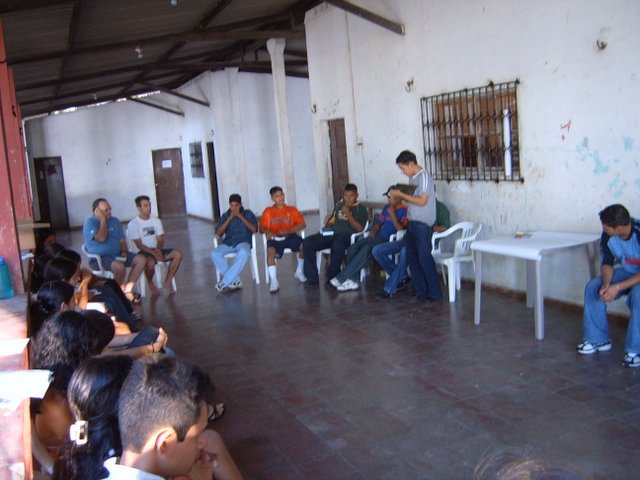
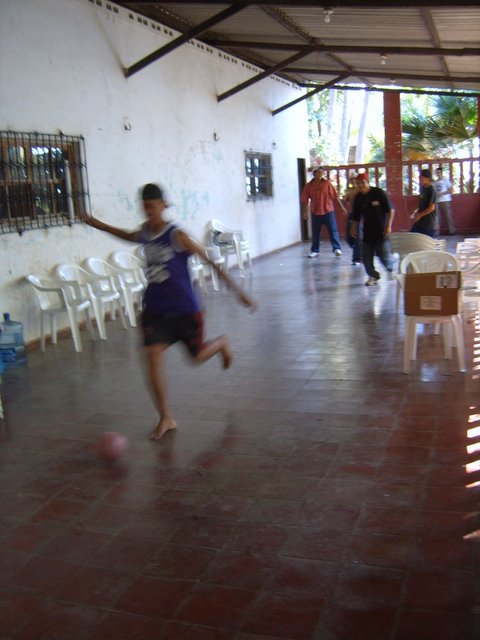
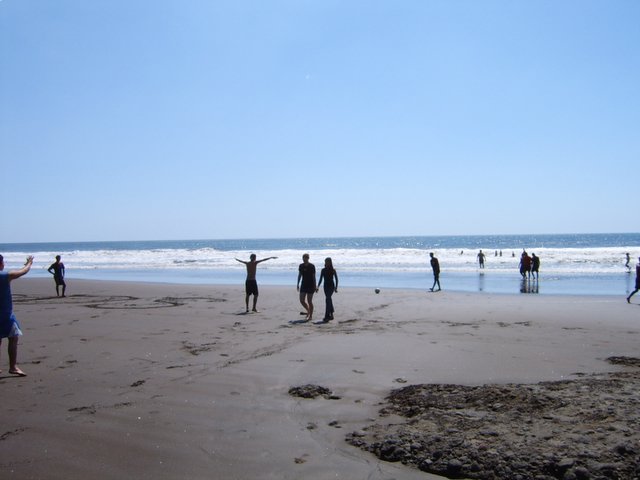
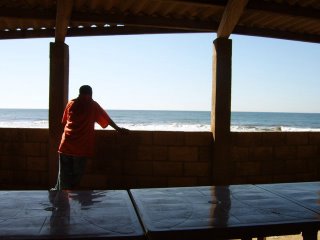
On January 20-21 Vince and I acompanied a group of 30 youth from our church and from a mission church in the countryside on a retreat at Cielo Mar, the rustic diocesan retreat center right on the beach. I gave a talk on self-esteem, the lay missioner from the campo church gave a talk on our relationship with God, there was Compline, Morning Prayer, a 1 AM serenade by the boys outside of the girl's room, soccer, body-surfing, horseback riding on the beach, and swimming in the pool. We closed with a Eucharist in a little enclosed patio overlooking the sea, where the bishop would like to build a chapel someday. The kids asked for the self-esteem theme-- the president of the youth group, a real go-getter whom all the kids look up to, was heard to say, "I've got my self-esteem on the floor. It's really bad." I think these kids are amazing-- they are so smart, and so organized (they planned the entire retreat themselves), and they're the ones that have survived, that have somehow made it past the temptations and pressure and have stayed out of the gangs. But now they're looking toward a future which is entirely uncertain, with little hope, and faced with a society that discriminates against them just for being young (the general feeling is that if you're under 25 and not a jet-setter there's a good chance you're a gang member). It's not so surprising then, that they have a hard time believing that they're worth anything. I don't think I will ever forget looking them one by one in the eye during the sermon, with the waves crashing behind me, telling them over and over again-- "Dios te ama. Dios te ama. Dios te ama." God loves you. If you can come to really believe that, if you can absorb the love of God into your life and begin to act like it's true, to treat yourself as the beloved of God-- it's the one thing that can change everything.-Amy

Sunday, January 01, 2006

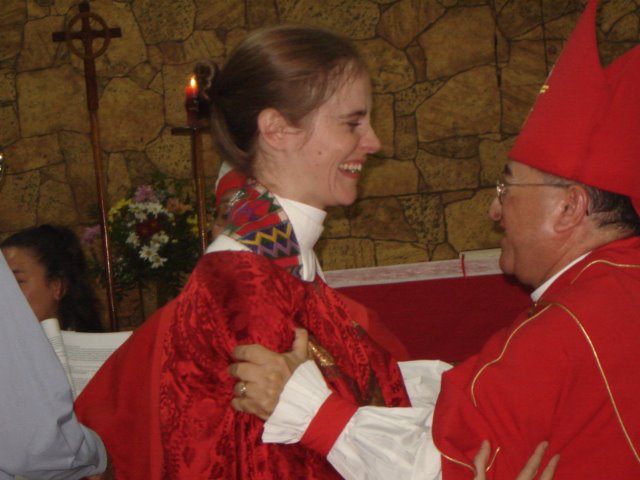
Amy's Ordination 27, dic. 2005

Above: Amy receives congratulations from el Obispo.


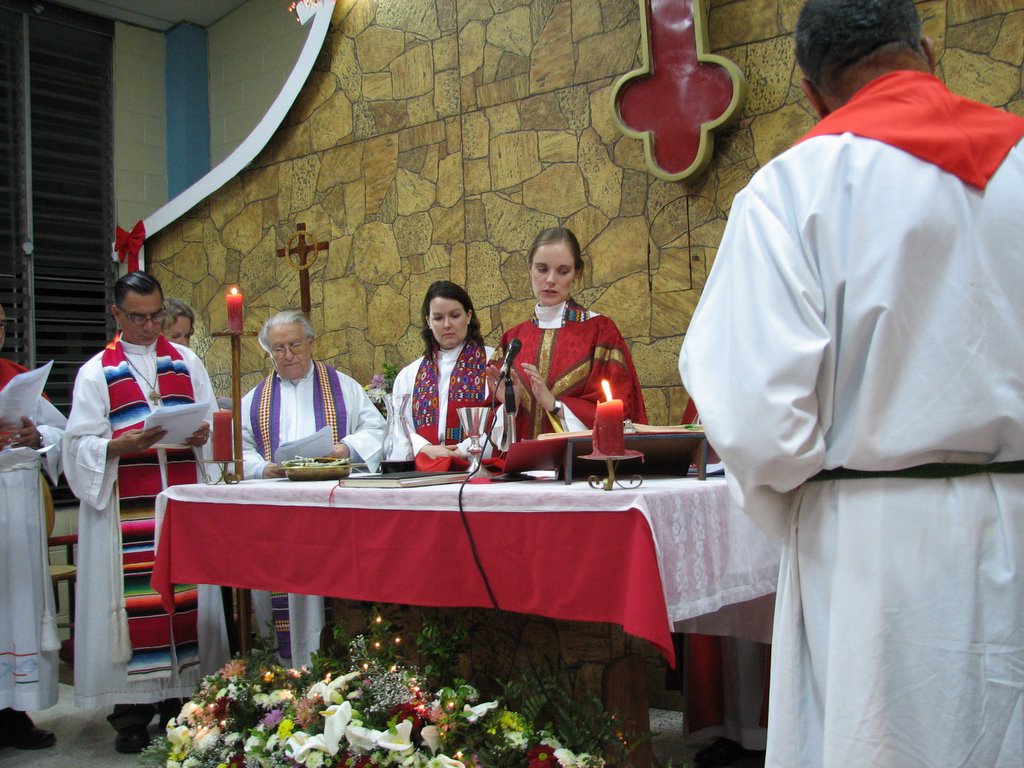
Above: Collegues from theDiocese of El Salvador and the Lutheran Church of El Salvador look on.
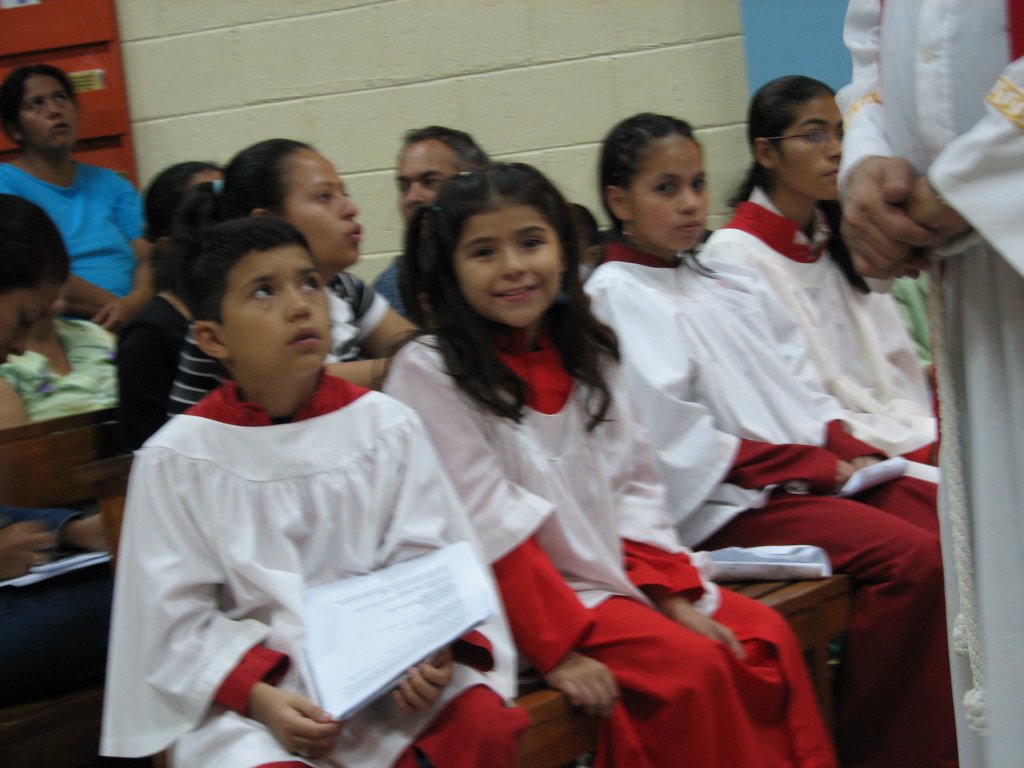
Middle: Acolytes from San Andres Apostol watch the ceremony .
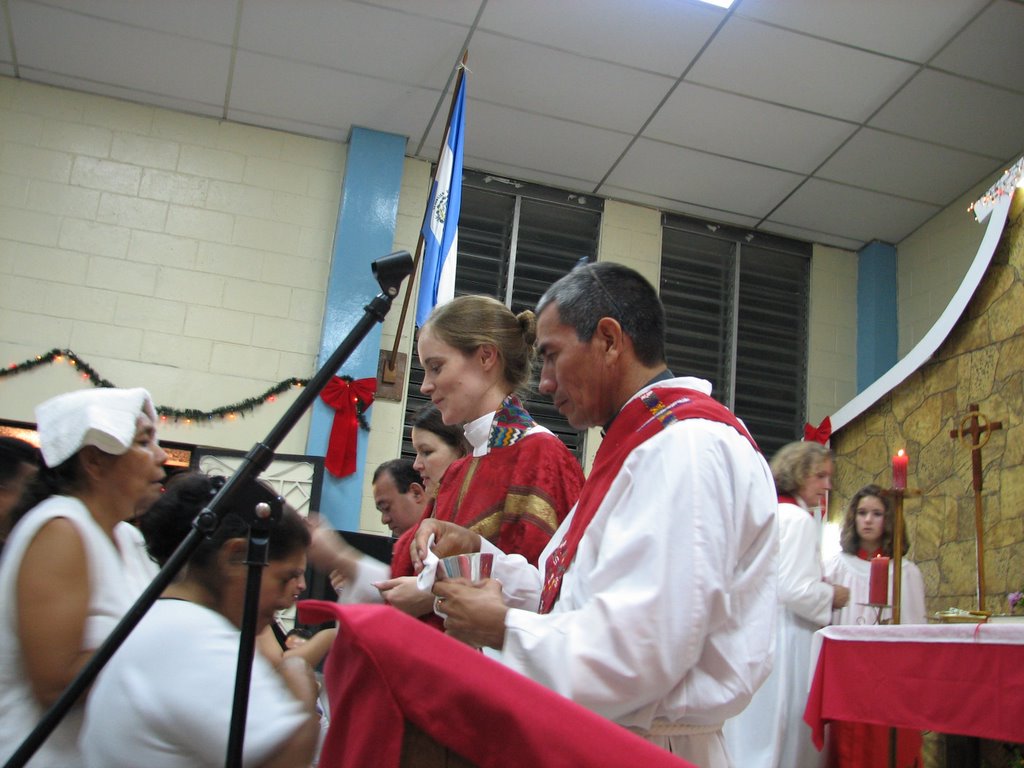
Above right: Amy celebrates her first Eucharist. Below: Rev. Cesar Hernandez, Rev. Hannah Atkins, Rev. Amy Zuniga, and Rev. Mario Nunez serve communion. Over 240 people received communion including 3 Roman Catholic priests from nearby parishes.


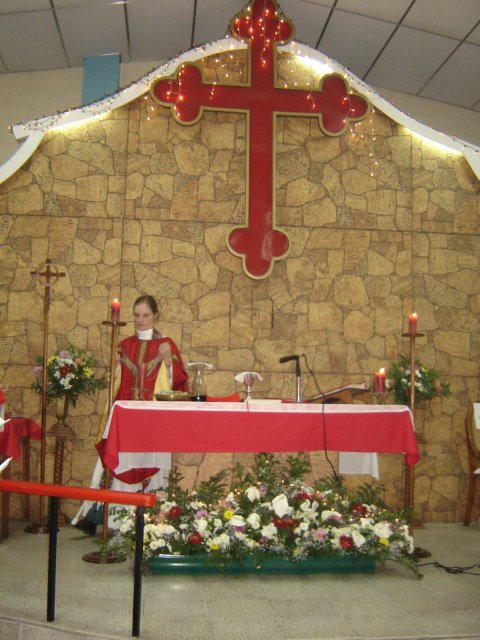
Above: Censing the altar prior to celebrating her first Eucharist.