Friday, March 10, 2006

Elections Day El Salvador
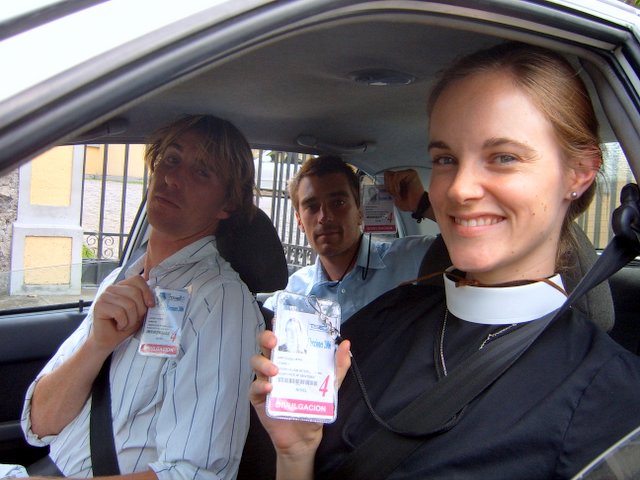

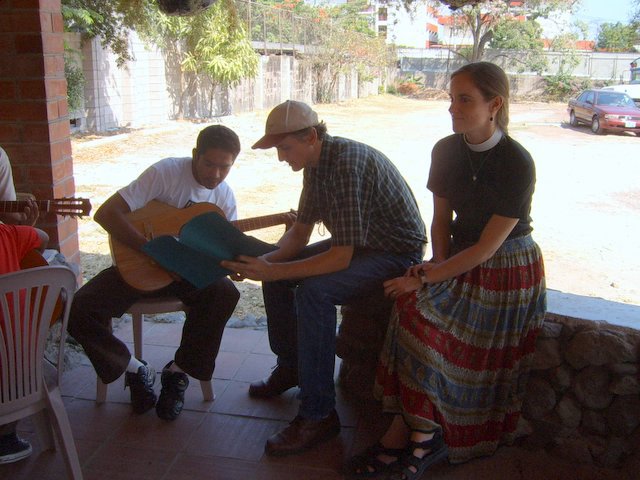
International observer team from Iglesia Angicana de El Salvador ready to head to the polls


Left: A man, Jose Humberto, was denied the right to vote because of the poor condition of this identifying document, even though his name, picture, birthdate, and other vitals were in the elections roster.

Left: Jose Humberto's info posted on the board

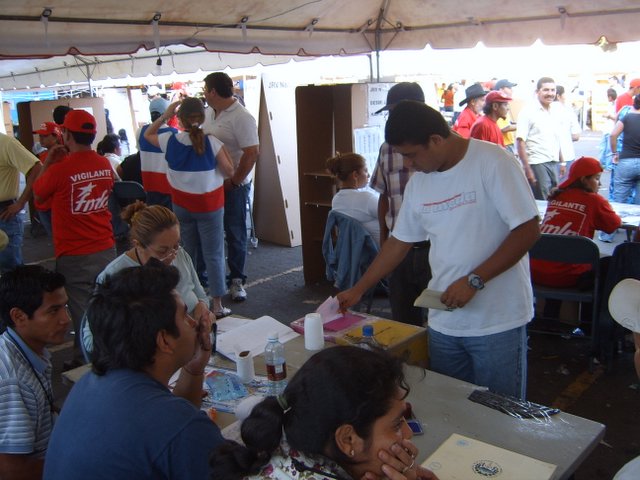
Above: Interviewed by the Co-Latino. According to a Site Boss, 4 others were denied suffrage at this site alone (the last name begins with "A" site for the Soyapango area) because of the poor condition of their DUI's, the Documento Unico de Identidad.


"The Anglican International Elections Observer Team," consisting of Amy and our friends Jeff and Noah, after a perfunctory certification and training process on Friday, headed out on Sunday to observe the process of Salvadoran democracy in Soyapango, where members of Amy's church would be voting. There were 11 different voting sites in Soyapango, one of the largest municipalities in the greater San Salvador area, and we stuck to one-- the site for people whose last names begin with "A". The process went a lot more smoothly than I anticipated-- our site had about 40 different tables, each table with a multi-partisan group of officials each with their job to do in assisting the citizens assigned to that table to vote (including checking the roster, taking the citizen's DUI, passing DUI's and grease pencils to the other officials, marking the citizens thumb black once he or she has voted, and making sure the citizen deposits the municipal and legislative assembly ballots in the corresponding pink or yellow box, etc.). The counting process was even more interesting, as each table went through the procedures for counting their ballots, invalidating unused ballots, and filling out the official "acta" stating how many ballots were received for each party.
In some ways the process is more simple and direct than voting in the U.S. (especially in California, with our obscure ballot initiatives and voting for officials of whose exact responsibilities I'm often unsure), and participation is definatley better-- this election had a better than 50% voter turn-out. In some ways, it is more nit-picky, like many things in El Salvador that have to do with bureacracy and procedure (see the photos of the man who was unable to vote because his DUI was in poor condition). And in some ways, it felt much more significant, because of the recent struggles and lives lost to obtain the level of democracy that does exist here. (Although Noah reminded me that universal suffrage has not always been a given in the U.S., either.)
The results? ARENA, the "offical" party of the president, which was in control during the war and has had control of the presidency ever since, and the FMLN, the party of the former guerilla, were neck-in-neck, both in the municipalities and in the National Assembly. The hotly contested mayorship of San Salvador is still being contested-- Bush-Gore style-- and we are awaiting the official results. I did feel like our vigilant presence at the "A" site in Soyapango made some small difference-- an inlegal ARENA flag behind a table official was removed, our opinion was listened to in debated cases, and somehow people got the message a little more deeply that the process of democracy matters-- not only to Salvadorans, but to their friends in the rest of the world as well.
-posted by Amy and Vince

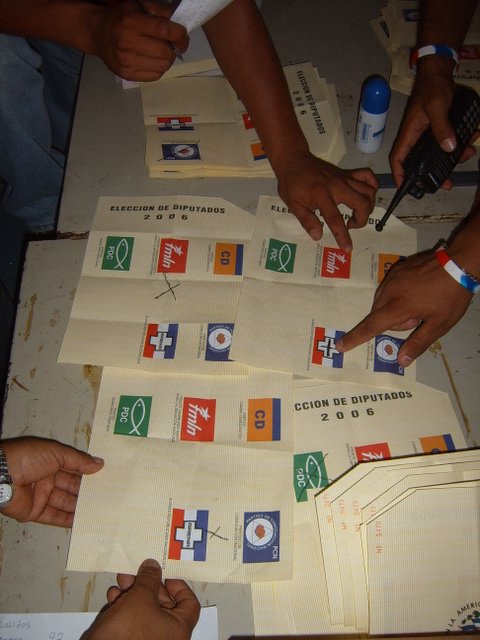


Right.: All three of these contested on the elections rosters votes were allowed.

Above Left: This vote, apparently for ARENA, was thrown out. Voters are supposed to place an X on the flag of the party they wish to vote for, which lead to some comical advertisements where the advertiser's party flag was crossed out in the ads.
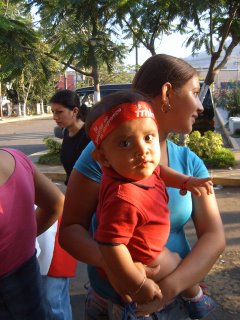
A young FMLN supporter

Thursday, February 02, 2006

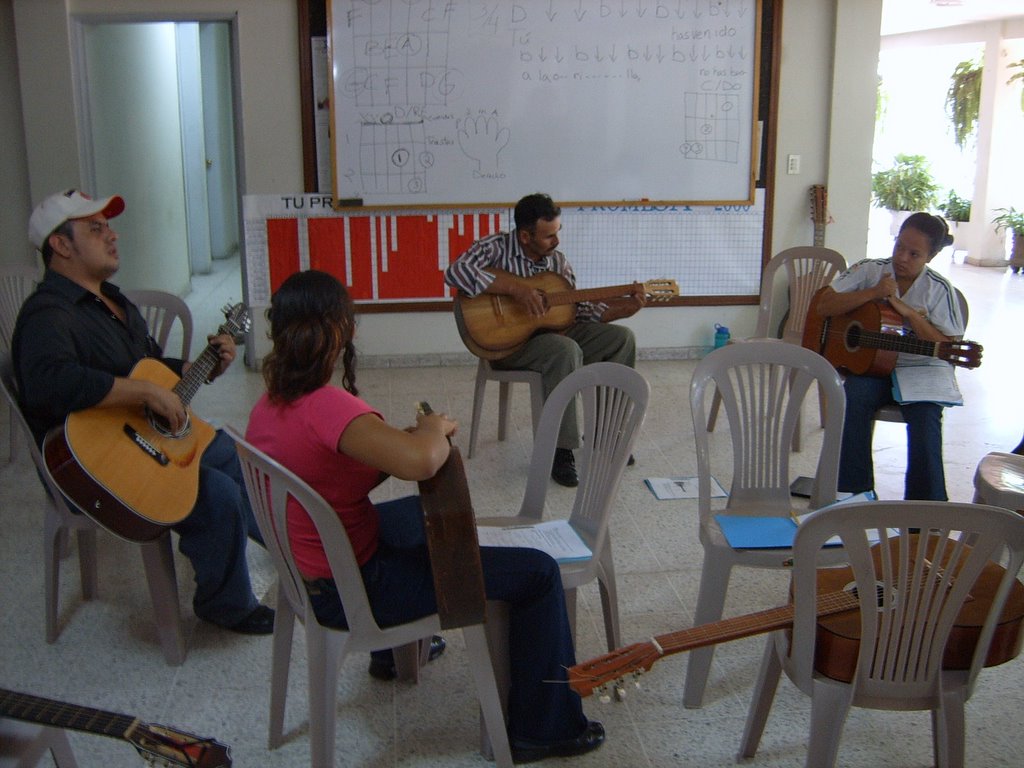
Taller de guitarra numero tres en San Salvador

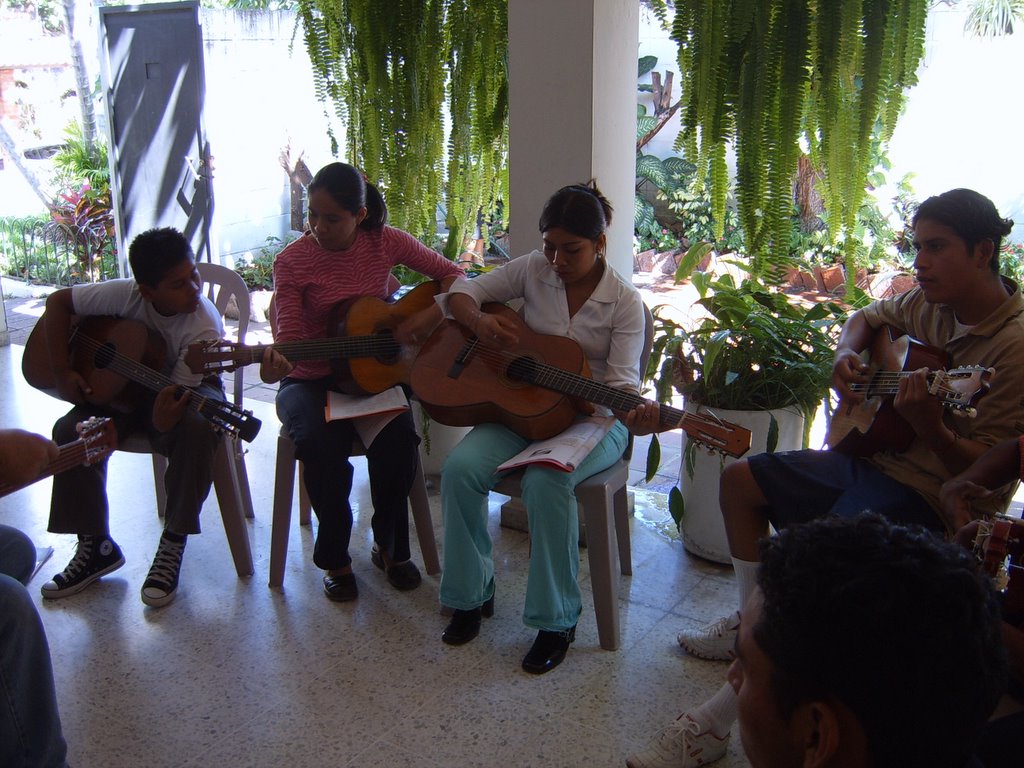
Students from El Carmen out in the Bajo Lempa region work on new songs

The third workshop went well despite a whigging out by the piano teacher (we're currently searching for another one). The turnout was a little smaller than the last one, but we continue to gain new students from different parishes. The students spent most of the day practicing what they've learned so far while we fostered interchange among them by forming small groups where they were encouraged to help each and teach new students the basic fingerings and chords. Ideally we'd like the workshops to turn into a place where students teach each other and learn from one another. By doing so, it won't be so dependent on us and can continue to flourish in the future and grow into a unique music program that reflects the soul of the church. Songwriting is another area that I'd like to address in the workshops and encourage the musicians to write their own songs and see what we come up with. I have a feeling we could come up with some pretty powerful songs. Transportation continues to be an obstacle for students. Those in the outlying areas are finding the five dollar bus ride to and from San Salvador to be too expensive, and so hopefully we'll start workshops this month out in the Western part of the country to address this issue and reach them. There are a number of eager students out in such areas as El Maizal and out near Ahuachapán with newly donated instruments from the diocese of Arizona, so hopefully we'll put the new guitars to use soon. We are set to order our next batch of guitars for the rest of the parishes with the grant from the Celtic Cross Society at Church Divinity School of the Pacific. -Vince
Friday, January 27, 2006

Service for Schafik Handal

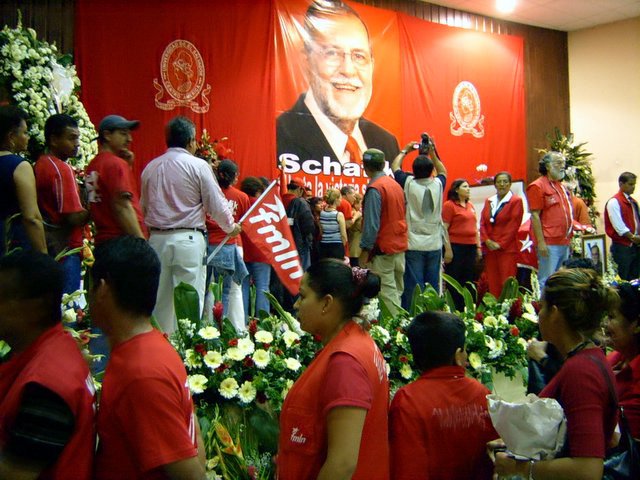
FMLN leaders wait in line to pay their last respects.
It was a zoo trying to get into the National University last Thursday night, where one of four night's consecutive wakes was being held for Schafik Handal, ex-comandante of the guerilla, and leader of the FMLN socialist political party that the guerilla became after the peace accords. Schafik was 75 years old, born into priviledge, and had spent most of his life struggling for social justice in El Salvador. He died of a heart-attack on the 24th of Februrary in the national airport, where he was returning from the inauguration of the new leftist Bolivian president. The airport in this country is not equipped with a defibrilator.

After having the trunk checked for bombs or weapons at gate, I parked the car and we made our way toward the mass of people in red. My companions and I made a bit of a spectacle-- four priests in clericals-- three North American, one Salvadoran-- and an elderly North American woman with a cane, as we made our way through the sea of red and finally where allowed through the ropes that were blocking the entrance to the law auditorium, where we understood the ecumenical service was to be held. During our forty-five minutes of waiting in the auditorium, we began to converse with a gentleman in his fifties who had been in the guerilla, and now works as an accountant. He looked earnestly into my face, and said, "Thank you. I can't tell you how much your support meant to the people during the war. It lifted us up when we were failing." My stomach dropped sickeningly for a few moments as I thought he was talking about the U.S.-- our government pumped a million dollars a day into the repressive regime's military, and was largely responsible for the failure of the revolution. Then it became clear that he was talking about the Episcopal Church of El Salvador.

When there was still no sign of an eccumenical service, our new friend looked into it for us and let us know that the place had been changed-- it was being held outside on the platform, so the more than 5,000 people present could particpiate. We knew the service would be mostly over, but we had come for this-- so we made our way out of the auditorium and back into the crowd. The Salvadoran priest went ahead, asking people to let us through, and when the people saw the group of priests and the elderly woman they started calling to the people just ahead to let us through, and supported our companion who was using a cane by both her elbows, almost passing her along from person to person. "Be careful-- there's a step here! Be really, really careful!" we were told. We heard the voice of Pd. Luis Serrano, the Dean of the Anglican Cathedral, coming over the loudspeaker as we made our way to the podium. We stopped just short of the podium, where Schafik's wooden casket sat, and then were invited up on to the podium for the remainder of the service. At the conclusion, we were given roses to place on the casket.

After placing our roses on the casket, we followed the bishop, at who's suggestion we had come, back toward the auditorium, where the viewing of the body was to be. This time we were walking through a roped-off pathway in the crowd, where the casket would pass through on its way to the auditorium. The red sea, crowding in on either side of this open walkway, was marked with expectant faces, who had been waiting for hours outside the auditorium to see Schafik's remains; posters with his face were being held against the ropes. They were shouting, "Vive Schafik! Que vive! Schafik vive! La lucha sigue!" (Schafik lives, the struggle continues.) This mixture of grief and energy and the awe of being treated as an honored guest, walking where his body was to pass, was overwhelming, and almost frightening to me. As we entered the auditorium the bishop raised his fist and joined in the shout, "Que vive!" And the person calling out shouted, "Que viven las iglesias progresistas!" and all responded, "Que viven!" (Long live the progressive churches-- May they live!).

We waitied in the auditorium a long time for the casket to arrive, and then finally it did, and we were some of the first to be allowed up on the stage to see his body. While I'm not to into viewings, it was a priviledge not to be forgone. -Amy

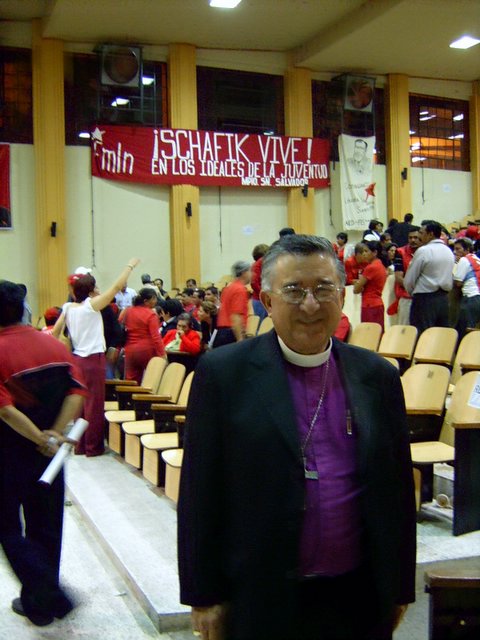
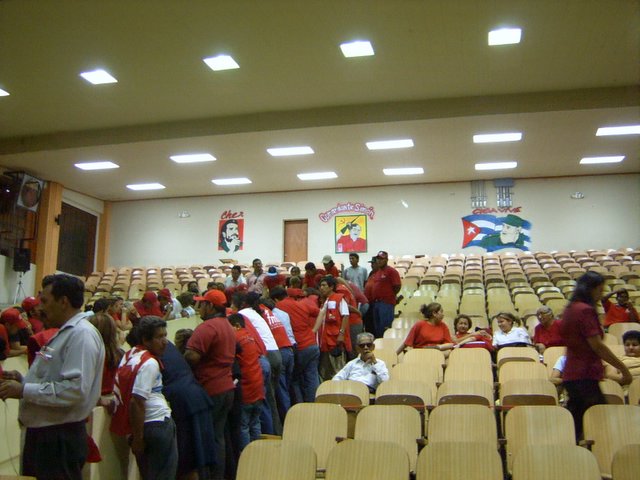
Below-Bishop Martín Barahona in the auditorium

The pall bearers lift Schafik's Casket onto the stage

Wednesday, January 25, 2006

Taller de Guitarra Numero Dos


The second guitar workshop was very successful. We had over thirty students altogether and people from other congregations who did not attend the first workshop attended as well. We added a piano teacher for this workshop and she had ten very eager students. Those who attended the previous workshop showed progress, which should improve since we received the first batch of guitars from the luthier who we contracted to make guitars for the various churches in the diocese. Practicing and improvement should increase now with reliable access to instruments. We handed them out at the workshop and a few of the students later said that their biggest worry was hoping that the guitars would not be stolen from them on the bus ride back to their churches. This was something we did not fully take into account. All of the guitars made it back to the churches safely, but having enough guitars for the students to play on at the workshop may be an issue, since they may be reluctant to bring the church guitar on the bus. Judging by the progress I've seen so far, we should have music in churches who've never had music relatively soon. Now, we're working on getting keyboards to those parishes who have interested congregants, and we would like to introduce other instruments such as the standup bass, which one parish does have, and vihuela. -Vince

Saturday, January 21, 2006

Youth Retreat- Cielo Mar

Jovenes (youth) from San Andres Apostol and San Pablo Letrán gather for breakfast


Left: The jovenes lead Morning Prayer

Right: An exercise in" Do Unto Others"


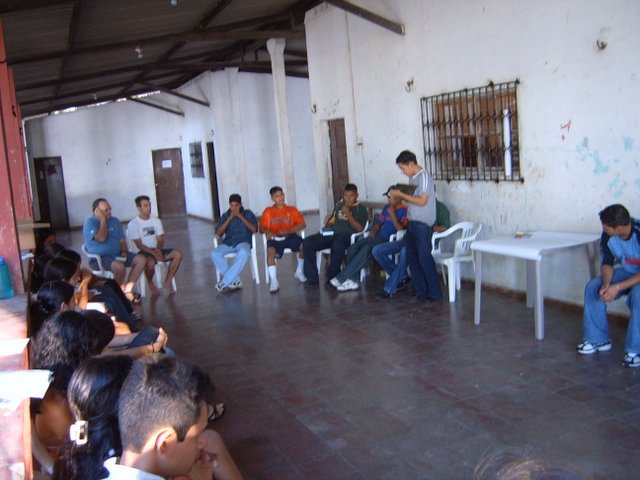
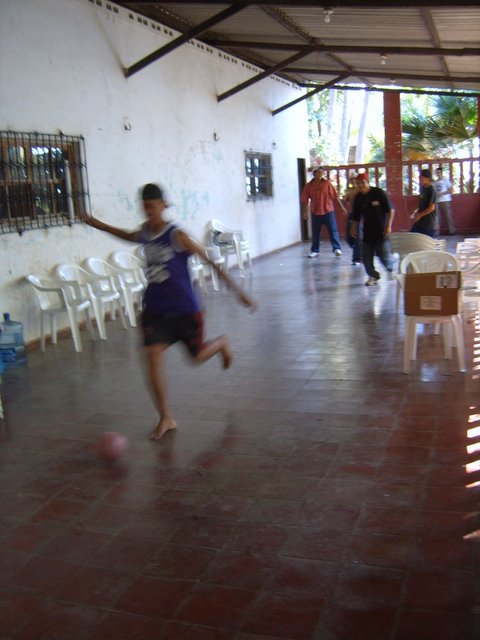
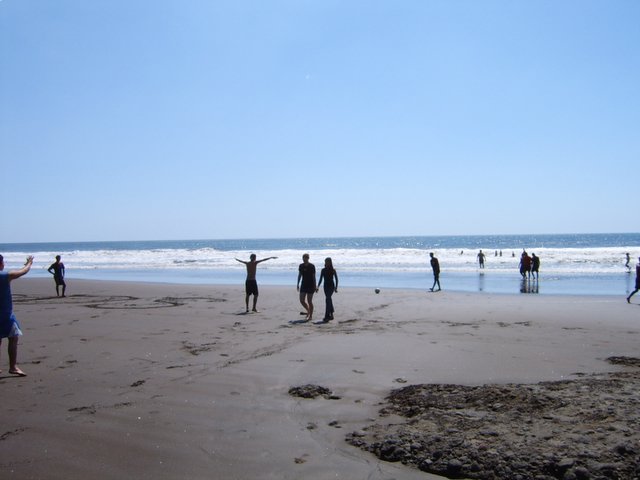
On January 20-21 Vince and I acompanied a group of 30 youth from our church and from a mission church in the countryside on a retreat at Cielo Mar, the rustic diocesan retreat center right on the beach. I gave a talk on self-esteem, the lay missioner from the campo church gave a talk on our relationship with God, there was Compline, Morning Prayer, a 1 AM serenade by the boys outside of the girl's room, soccer, body-surfing, horseback riding on the beach, and swimming in the pool. We closed with a Eucharist in a little enclosed patio overlooking the sea, where the bishop would like to build a chapel someday. The kids asked for the self-esteem theme-- the president of the youth group, a real go-getter whom all the kids look up to, was heard to say, "I've got my self-esteem on the floor. It's really bad." I think these kids are amazing-- they are so smart, and so organized (they planned the entire retreat themselves), and they're the ones that have survived, that have somehow made it past the temptations and pressure and have stayed out of the gangs. But now they're looking toward a future which is entirely uncertain, with little hope, and faced with a society that discriminates against them just for being young (the general feeling is that if you're under 25 and not a jet-setter there's a good chance you're a gang member). It's not so surprising then, that they have a hard time believing that they're worth anything. I don't think I will ever forget looking them one by one in the eye during the sermon, with the waves crashing behind me, telling them over and over again-- "Dios te ama. Dios te ama. Dios te ama." God loves you. If you can come to really believe that, if you can absorb the love of God into your life and begin to act like it's true, to treat yourself as the beloved of God-- it's the one thing that can change everything.-Amy

Sunday, January 01, 2006

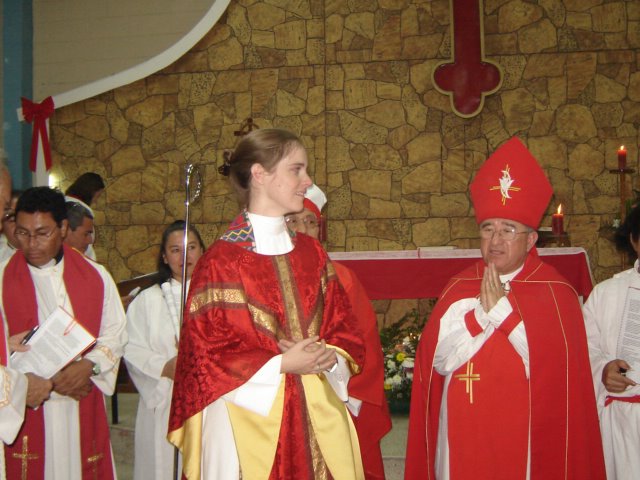
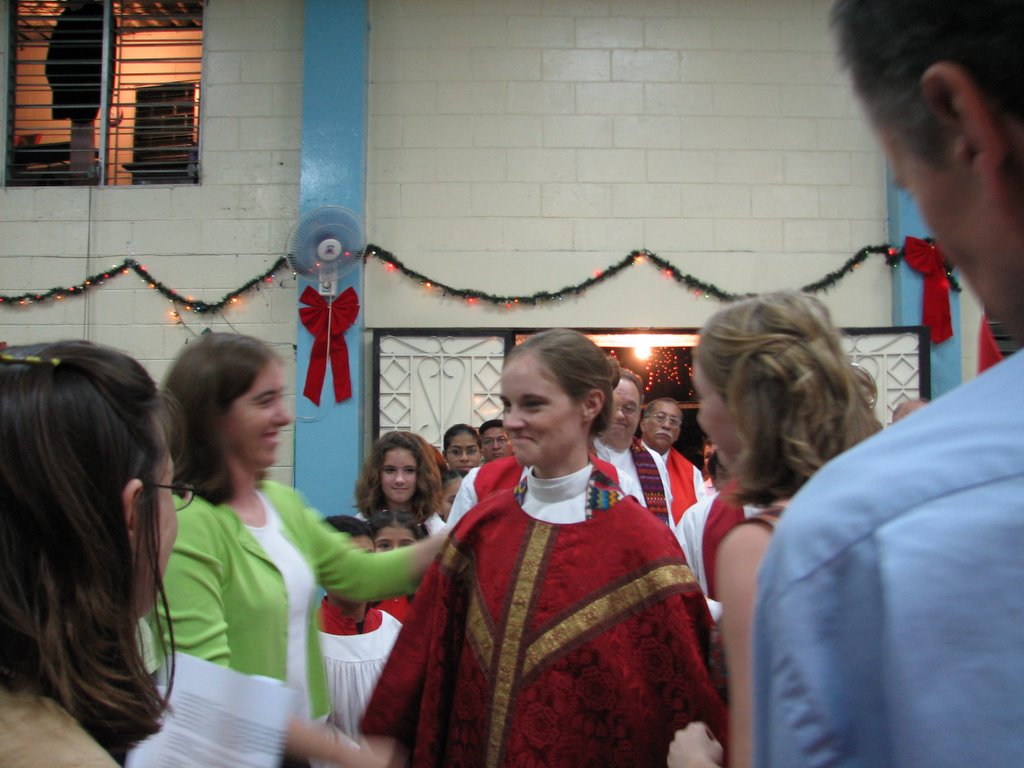
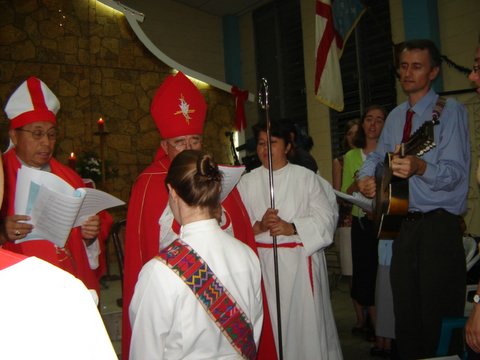
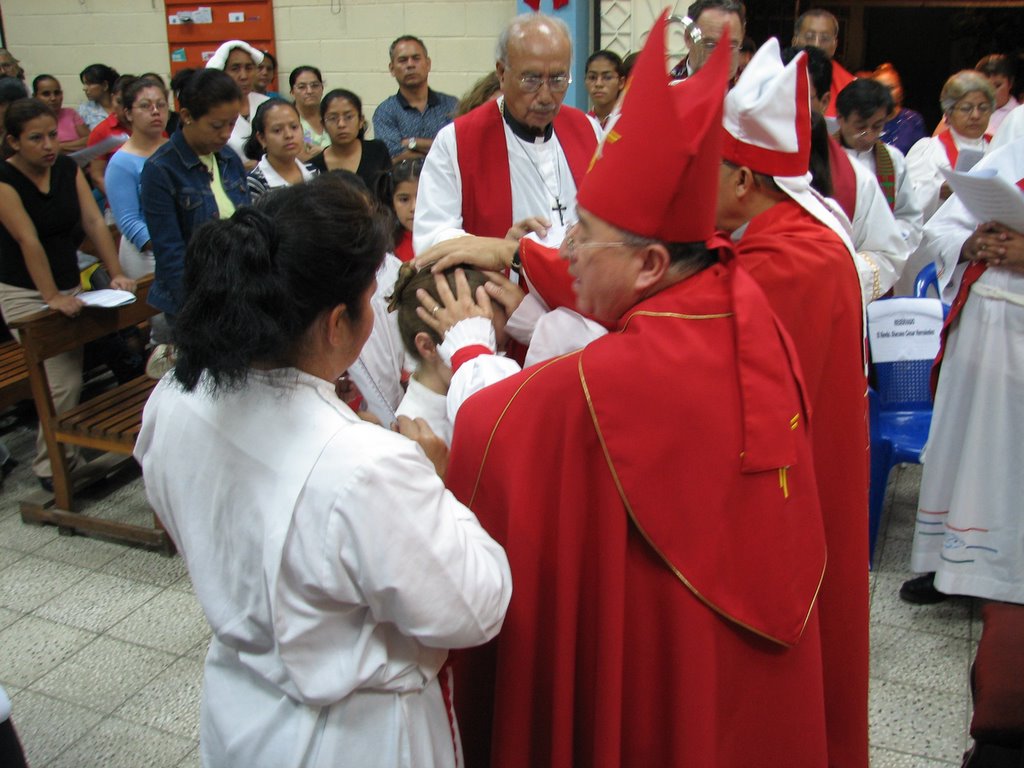
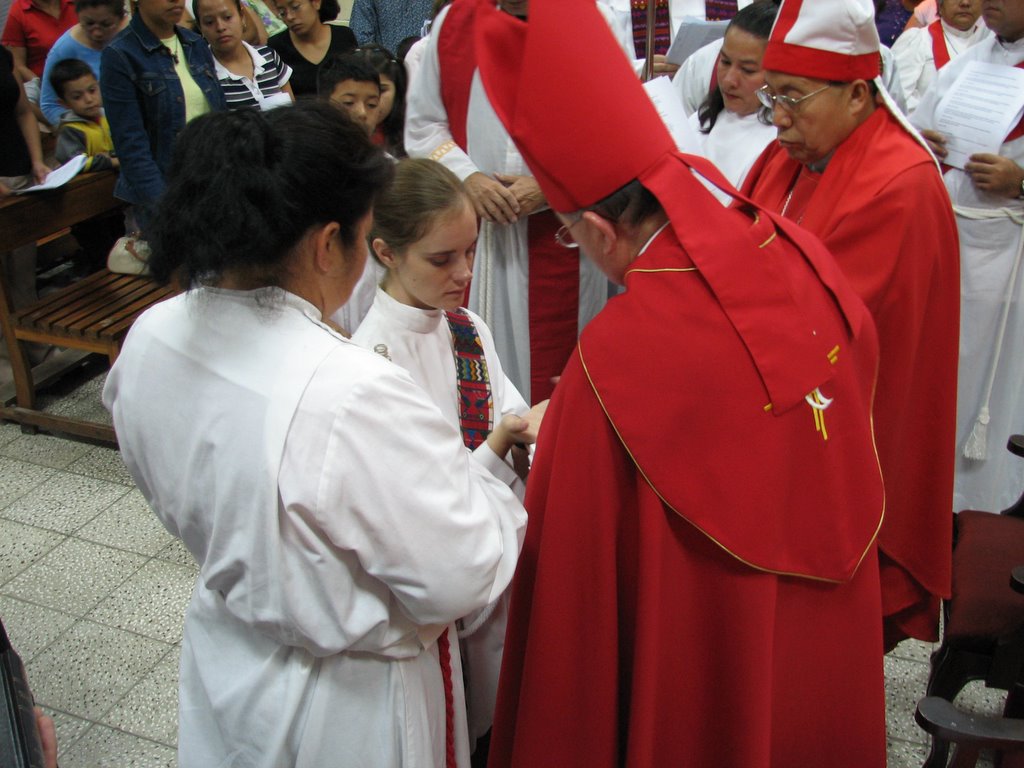
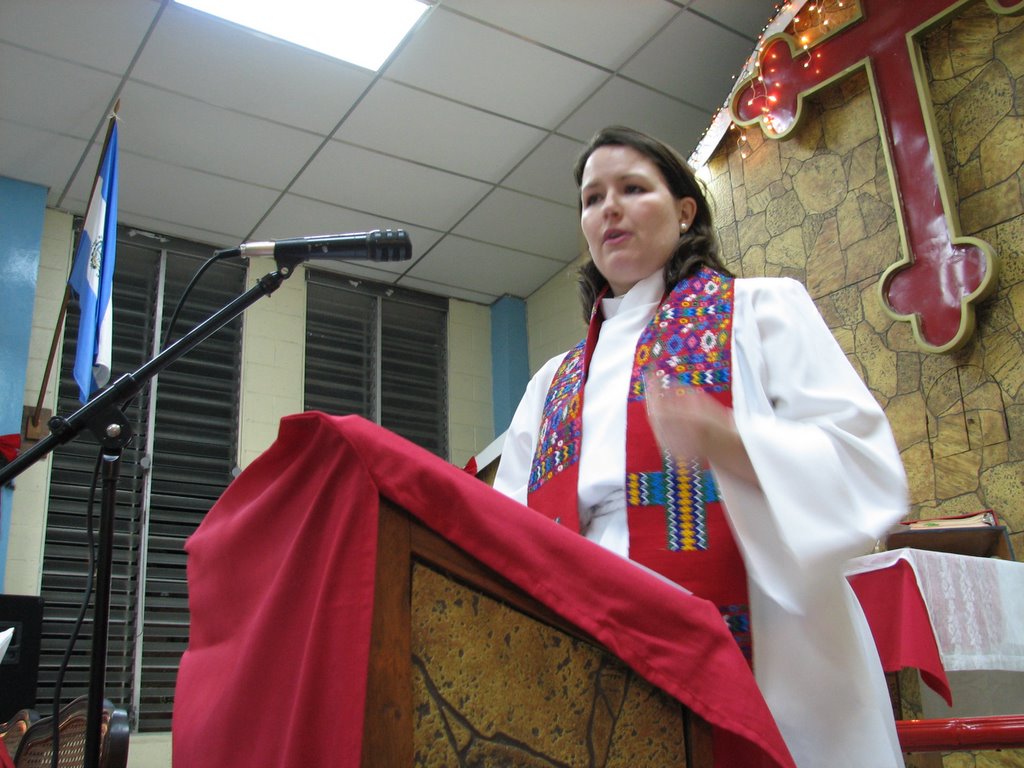
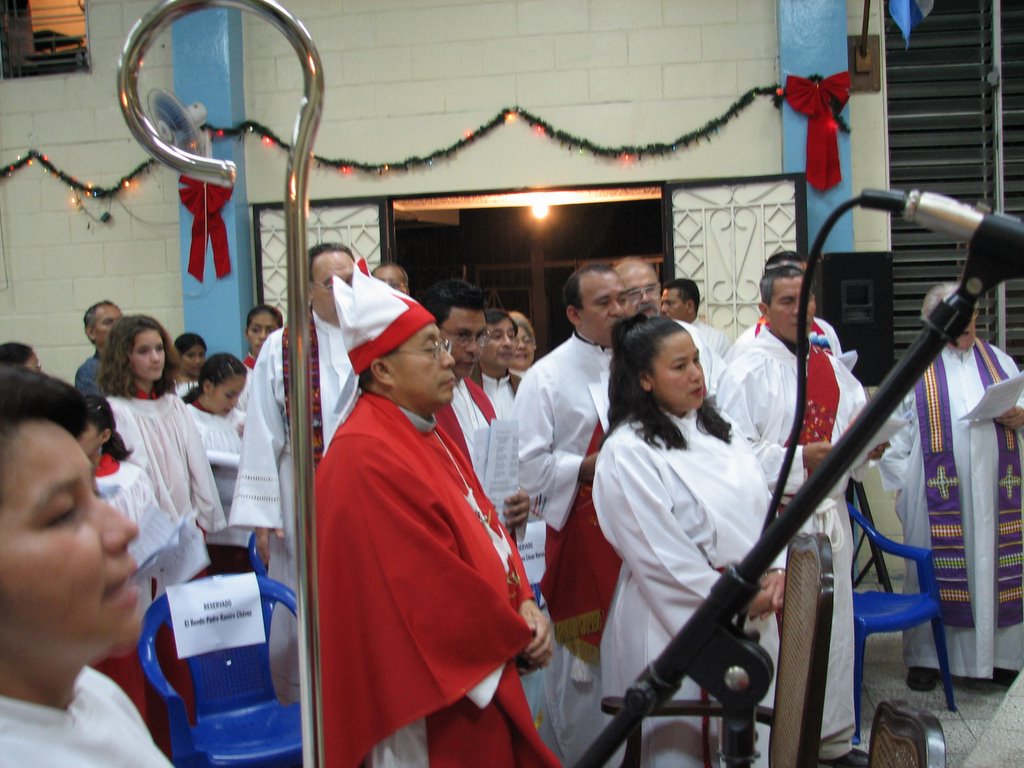
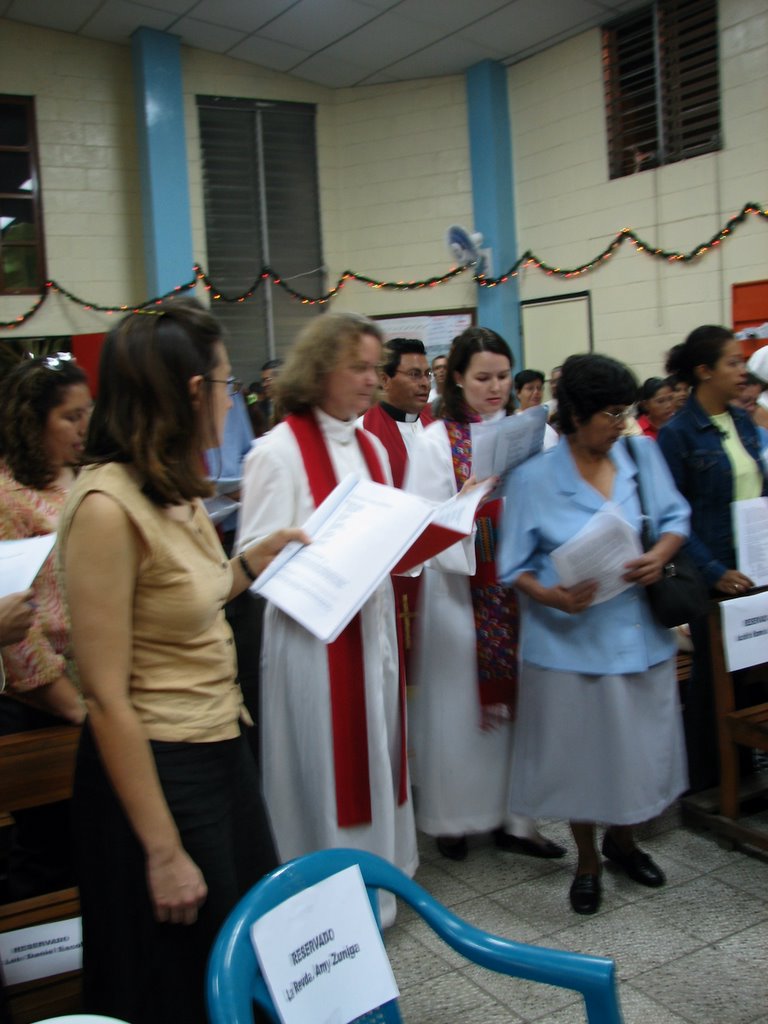
Amy's Ordination 27, dic. 2005

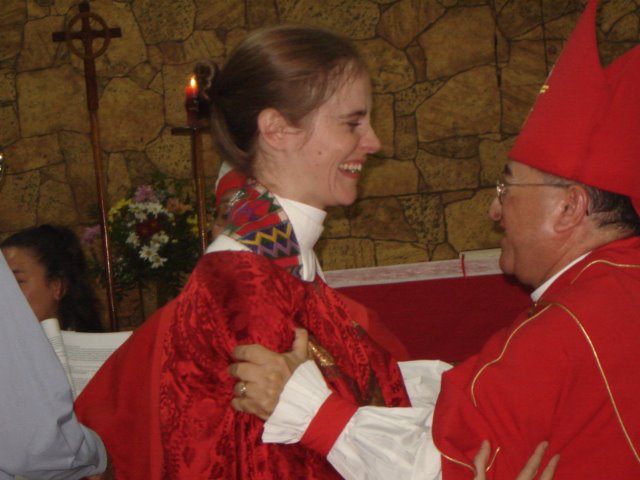
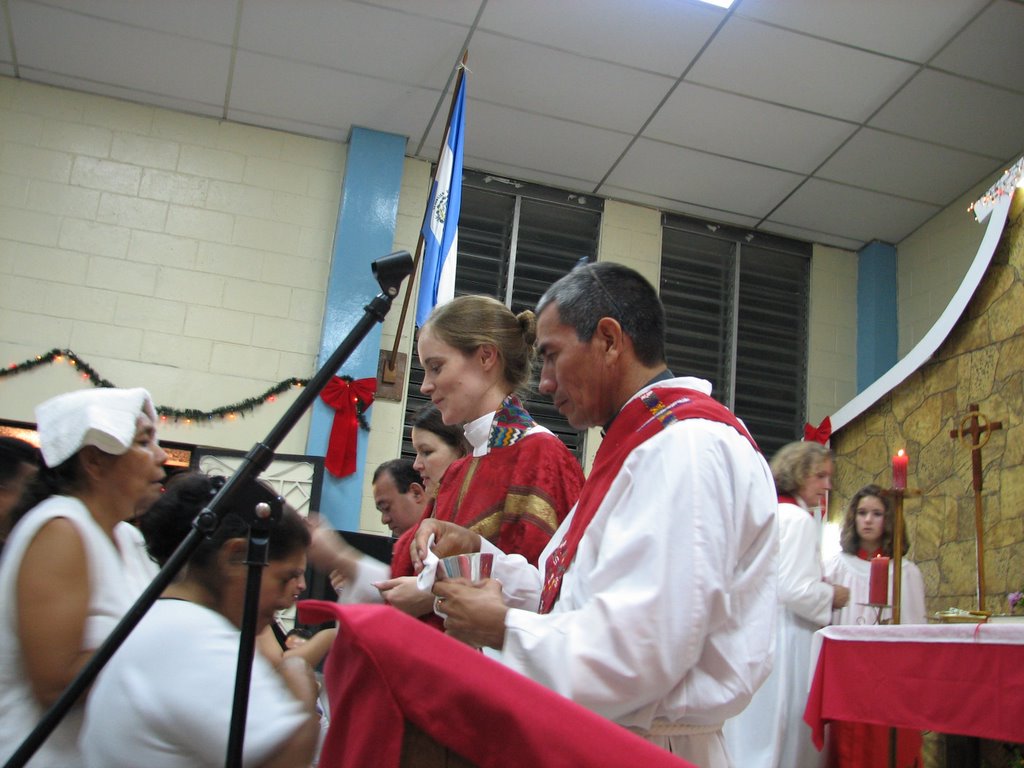
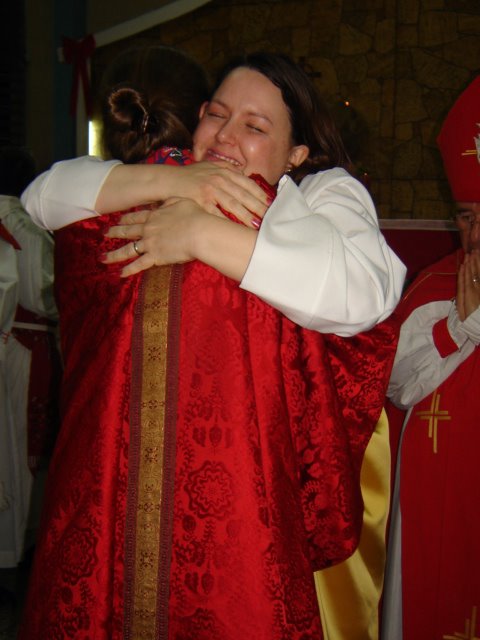
Above: Amy receives congratulations from el Obispo.


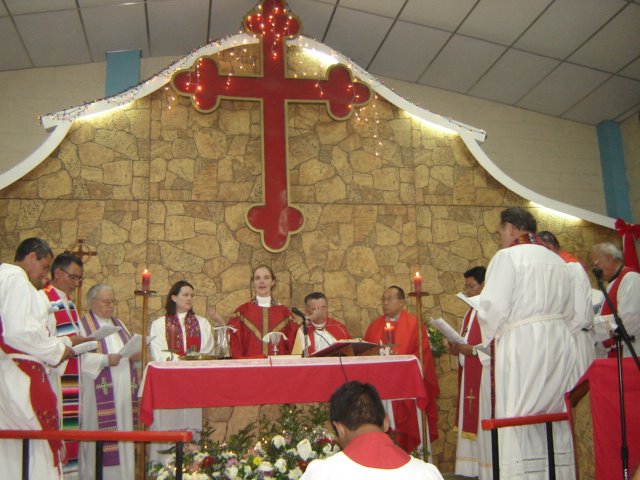
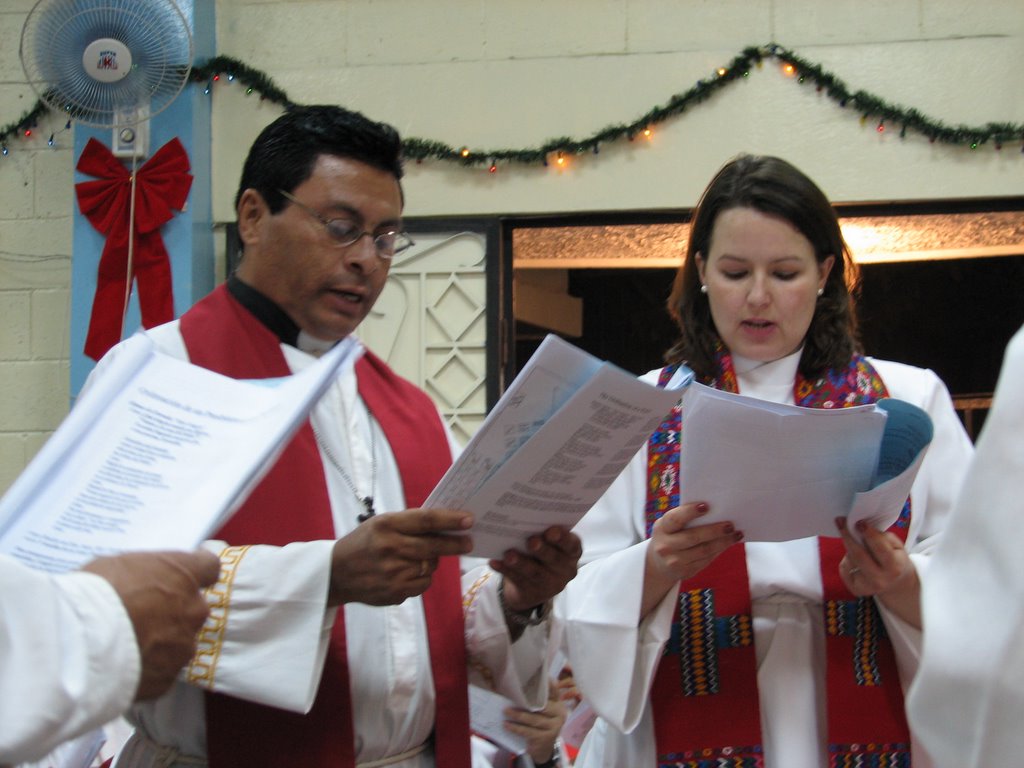
Above: Collegues from theDiocese of El Salvador and the Lutheran Church of El Salvador look on.
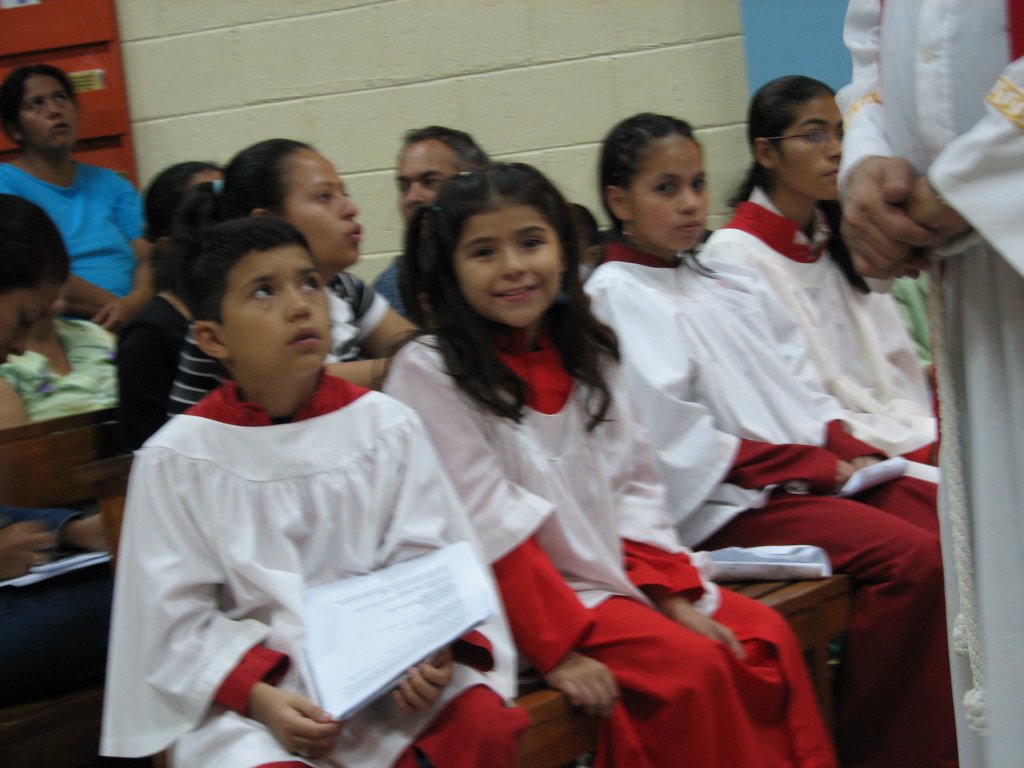
Middle: Acolytes from San Andres Apostol watch the ceremony .
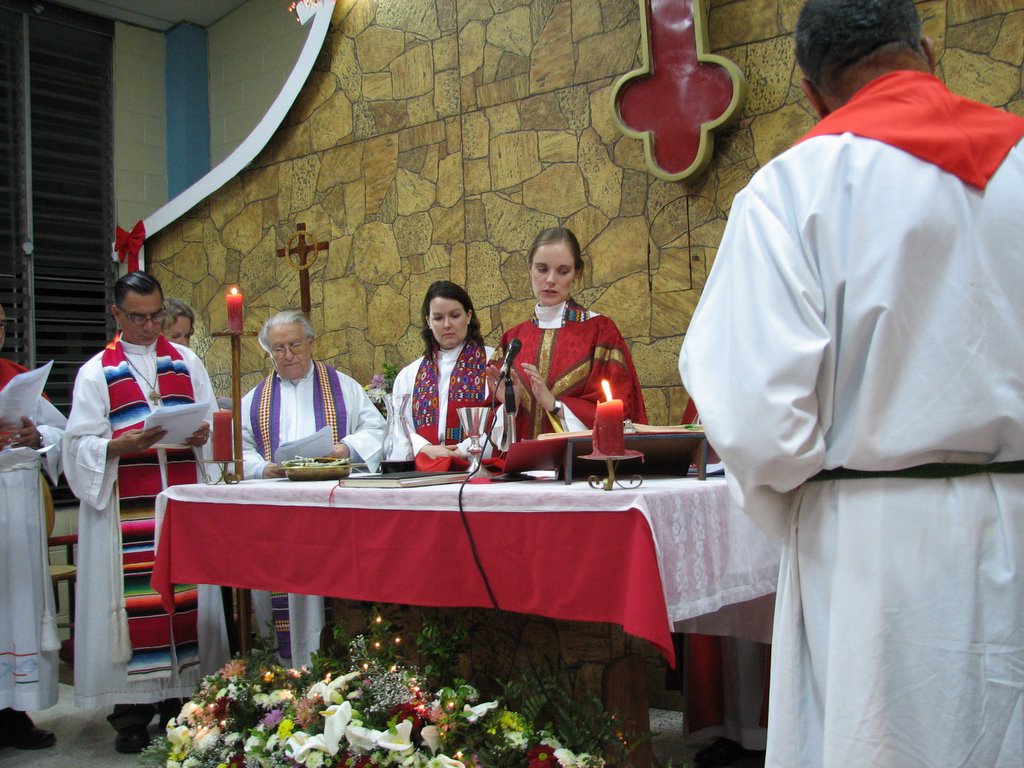
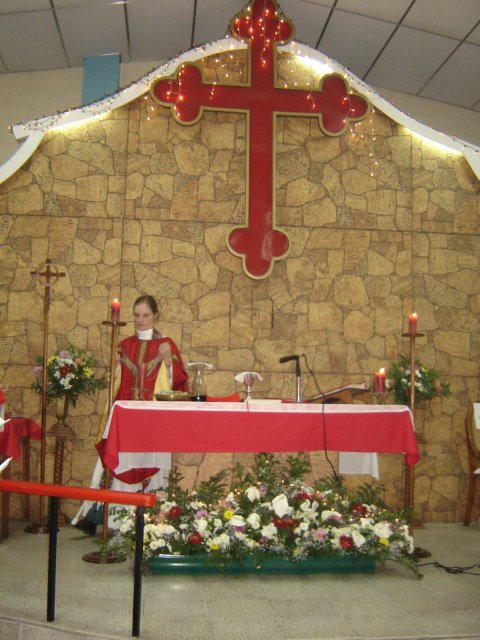
Above right: Amy celebrates her first Eucharist. Below: Rev. Cesar Hernandez, Rev. Hannah Atkins, Rev. Amy Zuniga, and Rev. Mario Nunez serve communion. Over 240 people received communion including 3 Roman Catholic priests from nearby parishes.


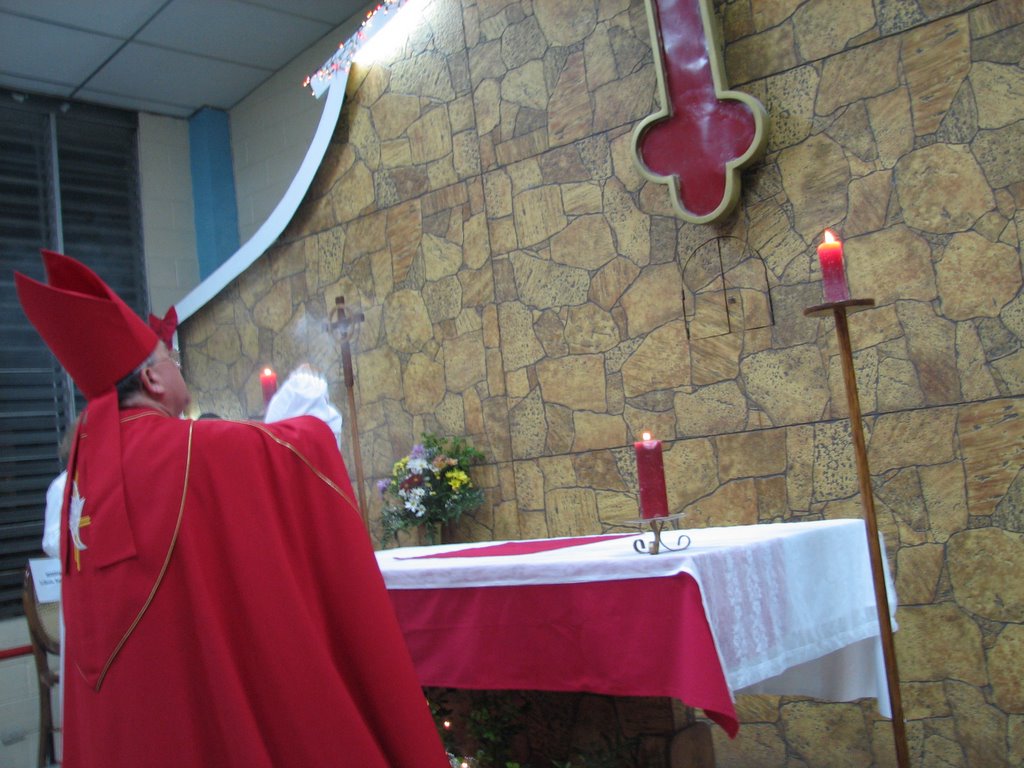
Above: Censing the altar prior to celebrating her first Eucharist.

Amy's Ordination Amatepec, El Salvador


Amy's Ordination Amatepec, Soyapango, El Salvador 27 dic.,2005

note-the order of the misa starts at the bottom of the posting
Left: The laying on of hands, Amy becomes a priest.
Below left:The Bishop anoints Amy's hands saying, "Eres sarcedote para siempre, segùn el orden de Melquisedec." (You are a priest forever after the order of Melchizedek)

Above: The Examen in Spanish and in English

Above: The Rev. Hannah Atkins preaches to a packed church. People were standing halfway up the aisle.

Below left: Amy is presented to the Bishop. Below right: Present and past mentors Rev. Germàn Lopez and Rev. Hannah Atkins present Amy to the Bishop.


Bishop of El Salavador and Primate of Central America, The Very Rt. Rev. Martìn Barahona censes the altar at the beginning of the misa.

Above Right: The Lutheran Bishop of El Salvador, The Rt. Rev. Merdado Gomez and Capellena Betty Escobar.

Right: Rev. Sarah Motley, Rev. Hannah Atkins, and Presentor Maura Alas process toward the altar.


The procession begins outside the church along the street.

Feliz Año Nuevo

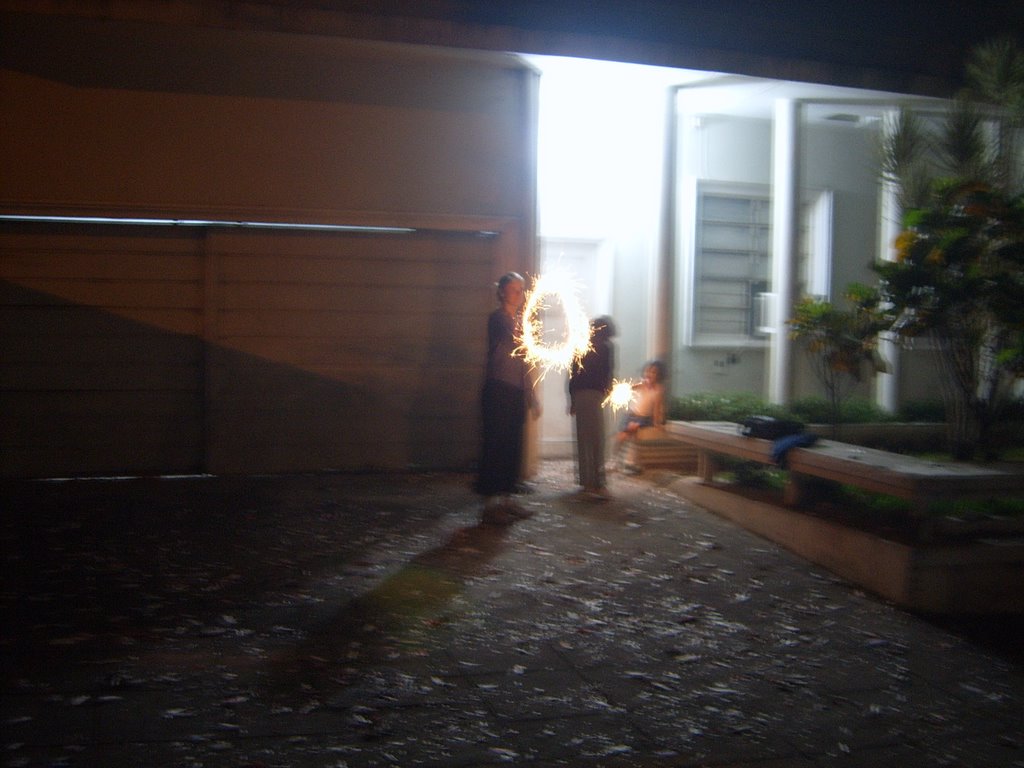
The neighbors near our apartment share their estrellitas with Amy.
New Year's Eve mass
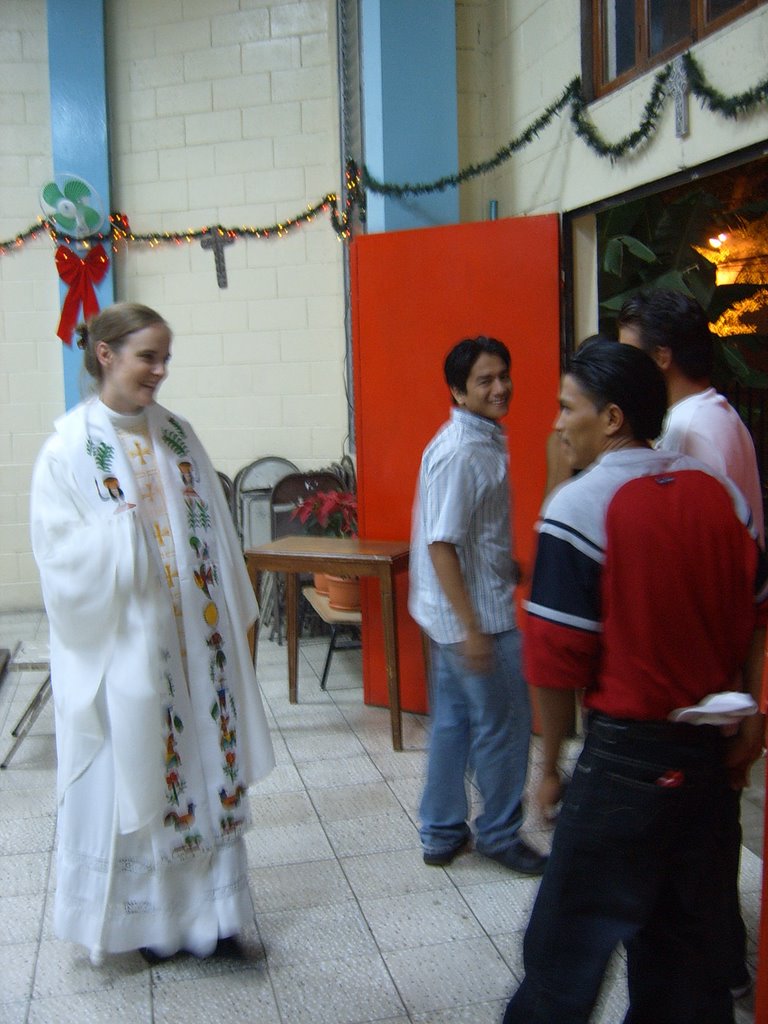
Below: La Reverenda visiting with some of her boys.

Below: Visiting in the house of Don Victor and Niña Vilma Ayala
"Cohuete!"

Waiting to chuck a Silvadore (a small whistling rocket)